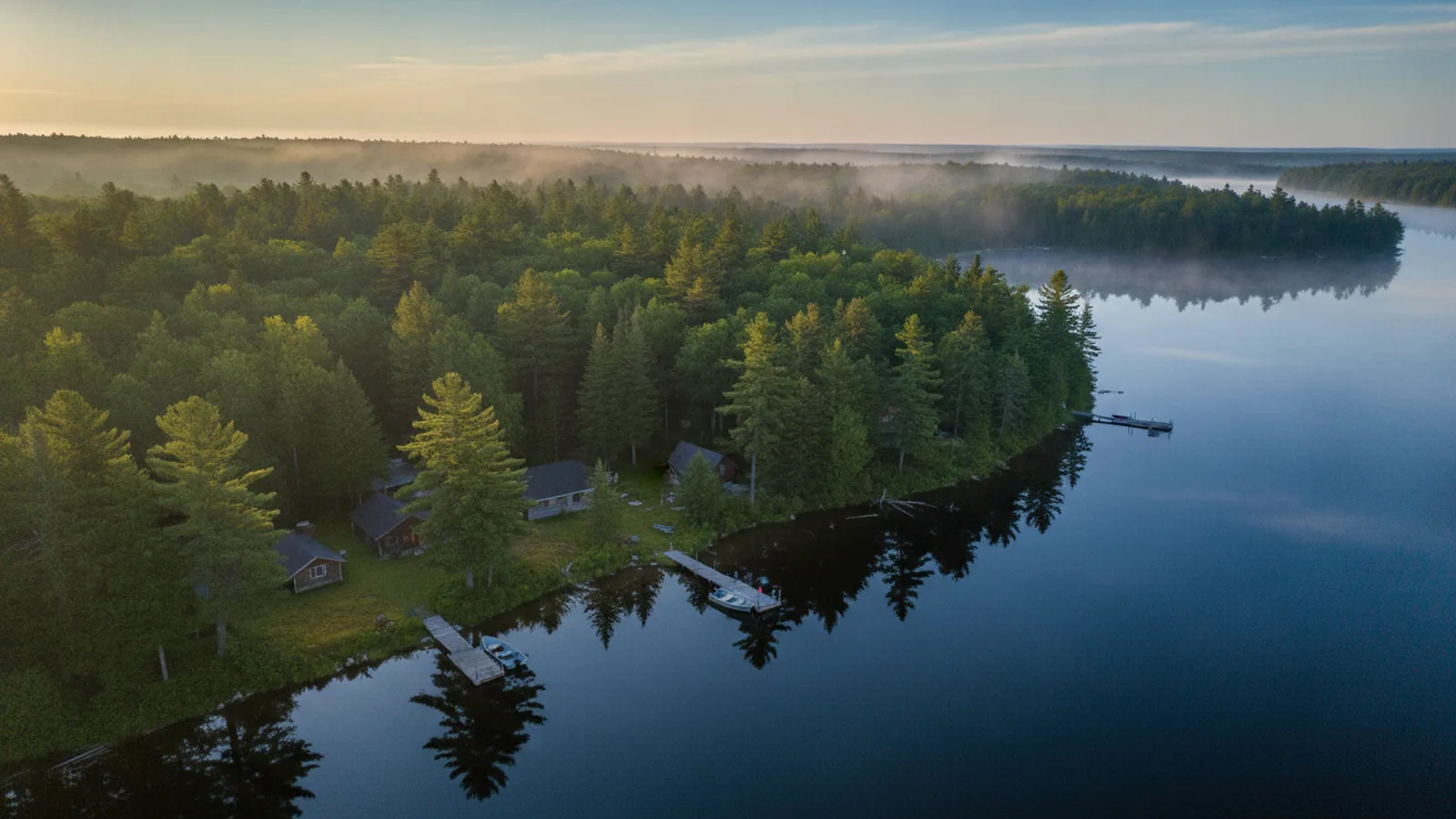
A camp that ran fine for thirty summers can quit in its first February as a house. That is not bad luck. When you convert a seasonal camp to year round septic use in Maine, you roughly triple the water going into a system that was designed, permitted, and buried for a fraction of that load. The tank does not know you retired. It only knows gallons.
Three things change the day the camp becomes a residence. The design flow the state expects goes up. The property picks up a permit obligation most owners never hear about until a code officer mentions it. And a system that used to sleep from October to May now has to run through mud season, ice, and plow traffic.
None of that means skip the conversion. Plenty of Penobscot County camps make the jump and the septic side works out fine. The owners who get surprised are the ones who treated it as a heating project and never looked underground.
If you are in the planning stage, an inspection before you commit is the cheapest money you will spend. Call (207) 300-9238 or book a visit and we can tell you what is actually in the ground before the contractor quotes the addition.
What Changes When You Convert a Seasonal Camp to Year Round Use
Start with water volume, because everything else follows from it.
A weekend camp with four people might see 80 gallons a day, two days a week, fifteen weekends a year. Call it 15,000 gallons annually. Move those same four people in full time, with a washing machine, a dishwasher, and four showers a day, and the property pushes north of 100,000 gallons through the same tank and field.
The tank does not fail from the total. It fails from the rate. A septic tank works by holding wastewater long enough for solids to settle and grease to float, and that retention time is a function of tank volume divided by daily flow. Cut the retention time and solids that used to settle start riding out to the drain field instead. That is how fields die.
Old camps make this worse because the tanks are small. We still pull covers on 500 and 750 gallon tanks around Pushaw and Chemo, some steel, some site-poured with no baffles left. A 500 gallon tank at seasonal use is fine. The same tank under a three bedroom year round house is a drain field replacement on a timer. Our septic tank size guide shows what current sizing looks like.
Habits change too. Camp life means laundry back home and short showers off a small water heater. House life is none of that. Assume the field now sees three to five times the load it used to.
The Change of Use Permit Trigger Most People Miss
Here is the part that catches people. In Maine, an existing septic system can keep operating even if it falls short of current rules, right up until something triggers a review. Adding a bedroom is a trigger. A malfunction is a trigger. So is a change of use, which is exactly what seasonal to year round occupancy is.
The logic is straightforward. The original approval, if one is on file, rested on assumptions about how much wastewater the property would generate. Go from seasonal to full time and those assumptions are void. The town is not being difficult. It is being asked to sign off on a system whose paperwork describes a different building.
What that means practically:
- Your local plumbing inspector, not the state, is the first stop. Every Maine town has one, and in Levant or Glenburn it is often a part-time job with limited hours.
- You will likely need a current HHE-200 form from a licensed site evaluator showing the system meets year round design flow for your bedroom count.
- If it already meets that standard, the conversion is paperwork only. That happens more often than people expect on camps built after the mid-1990s.
- If it does not, you are designing a new system before the occupancy change gets approved.
Do not skip this because the camp has been in the family since 1961. Grandfathered status in Maine protects the system you have for the use it was approved for, and it does not follow you into a new one. The Maine CDC Subsurface Wastewater Program administers the rules, and the Maine septic permit process post covers the sequence from soil test to approval.
One more wrinkle for lakefront camps. If your lot sits inside 250 feet of a great pond, shoreland zoning applies on top of everything above, and setbacks can decide whether a compliant replacement even fits on the lot. Sort that out before you buy windows.
Design Flow by Bedroom Count Decides Everything
Maine sizes septic systems by bedrooms. Not people, not square feet, not how careful you promise to be. Bedrooms.
The common design figure for a year round single family dwelling is 90 gallons per bedroom per day. Three bedrooms puts you at 270 gallons per day of design flow. Four bedrooms puts you at 360. A licensed site evaluator applies the current table in the state rules and writes the number on the HHE-200, but that is the arithmetic underneath it.
Seasonal camps can be designed at a reduced rate, which is why a camp system is often physically smaller than a house system with the same bedroom count. When you convert, that reduction goes away and the full year round number applies. That single change is what forces most replacements.
A practical note that saves real money. If the camp has a loft, a bunk room, and a back room with a closet, the town may count all three as bedrooms. A room with a closet and a window tends to count. Ask the code officer how rooms will be classified before you finish the interior, because a fourth bedroom on paper can move you from a paperwork conversion to a full system.
Here is the side by side.
| Item | Seasonal camp | Year round dwelling |
|---|---|---|
| Design flow basis | Reduced seasonal rate | Roughly 90 gal per bedroom per day |
| Typical existing tank | 500 to 750 gal, sometimes steel | 1,000 gal minimum, 1,250 to 1,500 common |
| Permit on file | Old HHE-200 or none at all | Current HHE-200 matching bedroom count |
| Pumping interval | Often stretched to 6 or 8 years | Every 3 to 5 years, no stretching |
| Freeze exposure | High, system sits idle all winter | Lower at the tank, high at shallow lines and plowed ground |
| Routine pump-out | $350 to $550 | $350 to $550, plus $100 to $300 winter surcharge |
| Drain field lifespan | 20 to 30 years | 20 to 30 years only if sized for the real load |
A couple in Glenburn found this out the practical way. Two bedroom camp on Pushaw they planned to retire into, a third bedroom in the drawings, and a $400 inspection before anything else. The tank turned out to be 750 gallons, poured on site, outlet baffle gone. The inspection did not save the system. It saved them from finding out in month four with a finished basement and a wet lawn.
Different outcome in Hermon. A family bought a 1998 camp whose original owner had planned to convert and never did, so the 1,000 gallon tank and field were already designed for three bedrooms at full residential flow. Their conversion cost a site evaluator visit, a permit filing, and a $450 pump-out. That version exists.
Freeze Proofing a Year Round Camp Septic System in Maine
Counterintuitive but true: full time occupancy makes the tank less likely to freeze, not more. A tank that gets warm water every day stays active. A tank that sits from Columbus Day to Memorial Day is the one that turns into a block.
That said, camps carry freeze risk that houses usually do not, because camp systems were built shallow and cheap. What to check before your first winter:
Pipe depth from the house to the tank. Camp builders ran a lot of these at 12 or 18 inches because the line was never going to see February. That run is the most common freeze point. If you cannot dig deeper, insulating board over the trench helps, and so does leaving the snow alone.
The tank lid and any risers. A riser brings the cover to grade, which is great for access and terrible for insulation. Insulate under the cap. Our riser cost post covers the tradeoff.
Anything with a pump or float. Pump chambers, effluent pumps, and alarm floats are electrical, and an outage in a January storm means the chamber fills with nowhere to go. Read septic systems during a power outage and effluent pump replacement before winter, not during.
Where the plow goes. This is the big one. Snow is insulation, and driving or plowing over the tank and field strips it off and packs the soil. Frost drives deeper into compacted ground every time. Stake the field corners in November. Plowing and driving over a septic system in winter has the details.
Low flow fixtures, used sensibly. They save water, which the field likes, but they also mean less warm water moving through shallow lines. Read how low flow fixtures affect a septic system and do not run the house at a trickle in January.
An Old Town family learned the packed-snow lesson the hard way. They moved in that October, kept parking the truck on the same flat spot they had used every summer, which happened to sit over the tank, and had a frozen inlet line by February. The Saturday emergency call ran $750. Moving the truck twenty feet would have cost nothing. Can a septic system freeze in Maine covers the mechanism.
One habit to drop: the fall winterizing routine stops now. Do not pump the tank dry heading into winter, because an empty tank in frost-heaving ground can float or crack.
What It Costs to Convert a Seasonal Camp to Year Round Septic
The range is enormous, and which end you land on is decided by what is already buried.
The cheap version is a system that already meets year round design flow. You pay a licensed site evaluator to document it, pay the town for the permit, and get a septic inspection at $200 to $500 to confirm the tank and baffles are sound. Add a routine septic tank pumping at $350 to $550 to start the clock clean.
The expensive version starts with a soil test. If the existing system misses current design flow, a site evaluator digs test pits, completes the HHE-200, and designs a replacement. See septic soil tests and site evaluations and new septic system cost in Maine for real numbers. On a tight lakefront lot with poor soils, the design alone can take months.
Then there are the ongoing costs nobody budgets for. Year round houses get pumped every 3 to 5 years, full stop, and winter pumping carries a $100 to $300 surcharge for frozen ground and access. Emergency calls run $650 to $850. A septic service contract is worth pricing if you would rather not track the interval yourself. The EPA homeowner guide is a good primer on how loading shortens field life.
Get the underground answer before the aboveground project. We have watched people in Orono and Brewer finish a beautiful conversion and then find the septic bill was bigger than the insulation bill. Call (207) 300-9238 and we will look at the tank first.
Where to Stop and Call Somebody
Plenty of this is homeowner work. Reading your HHE-200, calling the code officer, staking the field before winter, keeping the plow off the drain field.
Three things are not.
Opening or entering a tank. Septic tanks generate hydrogen sulfide and methane and displace oxygen. People die in them every year in this country, including people who climbed in to help someone else. Never open a lid to look, never lean in, never send anyone in.
Electrical work on pumps, floats, or alarms. Water and 120 volts in a buried chamber is not a place to learn. Effluent pumps, control panels, and float switches are licensed work.
Any excavation. Digging to find the tank or open a field trench needs someone who knows where the components are and what a bucket does to a leach line. It also needs Dig Safe.
The rest of a camp conversion is planning, and planning is where the money gets saved. Figure out what is buried, figure out what the town needs, then decide whether you are converting a system or replacing one. Anywhere in Penobscot County, we can start you with a look in the tank and an honest read. Book a visit or call.
Frequently Asked Questions
Do I need a new septic permit to convert a seasonal camp to year round use in Maine?
Usually yes, because going from seasonal to year round occupancy is a change of use and the design flow the original approval was based on no longer applies. The town’s local plumbing inspector will want a current HHE-200 from a licensed site evaluator showing the system meets the year round design flow for your bedroom count. If the existing tank and field already meet that standard, the paperwork can be the whole job.
How is septic design flow calculated for a year round house in Maine?
Maine sizes residential systems by bedroom count, not by how many people actually live there. The common design figure for a year round single family dwelling is 90 gallons per bedroom per day, so a three bedroom house is designed around 270 gallons per day. A licensed site evaluator applies the current table in the state subsurface rules and puts the result on the HHE-200.
Will a camp septic tank freeze if we start living there year round?
Living there full time actually lowers the freeze risk at the tank, because daily warm water keeps things moving instead of letting the system sit still all winter. The real danger spots are shallow pipe runs, a bare uninsulated tank lid, and any part of the system you drive on or plow, since packed snow and traffic destroy the insulating layer. Most camp freeze-ups we see happen where the ground got compacted, not where the tank sat.
What does it cost to convert a seasonal camp septic to year round?
It depends entirely on whether the buried system already meets the year round standard. A camp with a 1,000 gallon tank and a field sized for the bedroom count may only need an inspection at $200 to $500 and a permit filing. A camp with a 500 gallon tank and an undersized field needs a soil test and a full replacement designed by a licensed site evaluator, which is a five figure project on most Penobscot County lots.