You’re tired of paying to pump a holding tank every few weeks all summer, so you start shopping for a composting toilet. It looks like the obvious fix: no water, no tank, no truck. The catch is that a composting toilet only solves half the problem, and the other half is where Maine camp owners get tripped up.
This article covers what a composting toilet is, how Maine treats one, what it does to your grey water situation, and the upkeep that comes with it. If you’ve got a camp on a lake or pond in Penobscot County and you’re weighing this against a holding tank, read on. If your system is acting up right now, call (207) 300-9238 and we’ll talk through a pump-out or inspection.
What a composting toilet actually is
A composting toilet is a toilet that doesn’t flush waste away with water. Waste goes into a chamber, gets mixed with a dry material like peat moss or coconut coir, and sits while air and microbes break it down. Less water means less liquid to deal with, and no pipe carrying toilet waste out to a tank.
There are two basic kinds:
- Self-contained units. The toilet and the composting chamber are one piece, sitting in the bathroom. Most camp installs are this type. Smaller models separate liquids from solids and you empty both by hand.
- Central or remote units. The toilet sits upstairs and drops waste through a chute into a large composting chamber below, usually in a basement or crawlspace. These need more room, ventilation and a plan for removing finished material.
Neither type is maintenance free. The word “composting” makes it sound like the toilet does the work while you’re away, but the process is slow, depends on temperature and moisture, and only works if you feed it properly. A camp that sits cold from October to May is a hard environment for composting.
How Maine treats a composting toilet
Maine’s Subsurface Wastewater Disposal Rules (10-144 CMR 241) cover how wastewater is handled on a lot that has no sewer. Within those rules, a composting toilet is one of the recognised “alternative toilets”, meaning a toilet that doesn’t use water to carry waste away. The published rules say a permit is required to install one, the contents have to be removed and disposed of in a legal and sanitary way, and any liquid overflow has to go to a disposal field. You can read the current rules on the Maine CDC subsurface wastewater rules page.
The person who decides what’s allowed on your lot is your town’s local plumbing inspector, usually called the LPI. They issue the permit, they inspect, and they know the local ordinances. A licensed site evaluator is the one who looks at your soil and designs a system if you need one, and files the design on a form called the HHE-200. We don’t do any of those jobs. We pump tanks, inspect systems and handle emergencies.
Here’s the practical advice: before you spend money on a unit, call or visit the LPI in your camp’s town. Ask what they allow for a composting toilet on your lot, whether a permit is needed, and what they want to see for grey water. Rules and details vary, and I’d rather you hear it from the person who signs the permit than from me or a product website. Our page on Maine’s subsurface wastewater rules explains who does what,.
The part people miss: grey water
Toilet waste is only part of what a camp puts out. Grey water is everything else: kitchen sink, bathroom sink, shower and laundry. In a camp with a composting toilet and nothing else, grey water has to go somewhere legal.
You can’t run it out a pipe onto the ground or into the ditch or lake. It carries grease, soap, food scraps and bacteria. In a camp that’s a few steps from the shoreline, that’s exactly the kind of thing the rules are written to stop.
So the real choices usually look like this:
- A holding tank for grey water. With no toilet water going in, it fills more slowly than a full holding tank, but it still has to be pumped. The rules and your LPI set what size it has to be.
- A permitted grey water disposal field. A small buried field sized for the water you use. Maine’s rules have a category called a primitive system, a grey water field paired with an alternative toilet at a place where water is hand-carried or hand-pumped. A site evaluator designs a field based on your soil, and the LPI permits it.
- An existing septic system. If the camp already has a working tank and field, a composting toilet may just reduce the load on it.
Don’t count on the idea that “it’s only a little dishwater.” Over a summer with guests, a shower and a washing machine, a camp can send a lot of grey water out the door. We cover this in more depth in our guide to grey water systems in Maine.
Holding tank, septic system or composting toilet?
The best choice depends on the lot, the soil, how close you are to water, how often the camp is used and how much work you want to do yourself. This table shows how the options usually compare.
| Question | Holding tank | Composting toilet plus grey water plan | Septic system with field |
|---|---|---|---|
| Where does toilet waste go? | Into the tank, pumped out | Into the composting chamber, emptied by you | Into the tank and then the field |
| Where does grey water go? | Into the same tank | Grey water tank or disposal field | Into the same tank and field |
| Who hauls waste off the lot? | A pumping service, on a schedule | You handle finished compost; a grey water tank still needs pumping | A pumping service every 3 to 5 years |
| Hands-on work for you | Low | High | Low |
| Winter concerns | Tank can fill, access in snow | Frozen liquid, cold chamber | Frozen lines, pump chamber |
| Needs a suitable site | No, but needs permit | Grey water field needs soil | Yes, needs soil and a design |
If you want the full comparison of the first and last columns, our post on holding tanks versus septic systems at a Maine camp is the place to start.
Shoreland zoning and camps near water
Most Maine camp country sits on a lake, pond or stream. Shoreland zoning adds stricter rules near water, and those rules can affect what you can do with waste of any kind, composting or not. I’m not going to quote a setback distance here, because it depends on the water body and on your town, and it’s the kind of number that’s worse to get wrong than to leave out.
What I can tell you is this. If your camp is close to the water, the LPI will care about where grey water goes and where finished compost ends up. A grey water field that works fine on a hilltop lot may not be allowed twenty steps from a pond. Our post on shoreland zoning and septic systems in Maine explains the general idea.
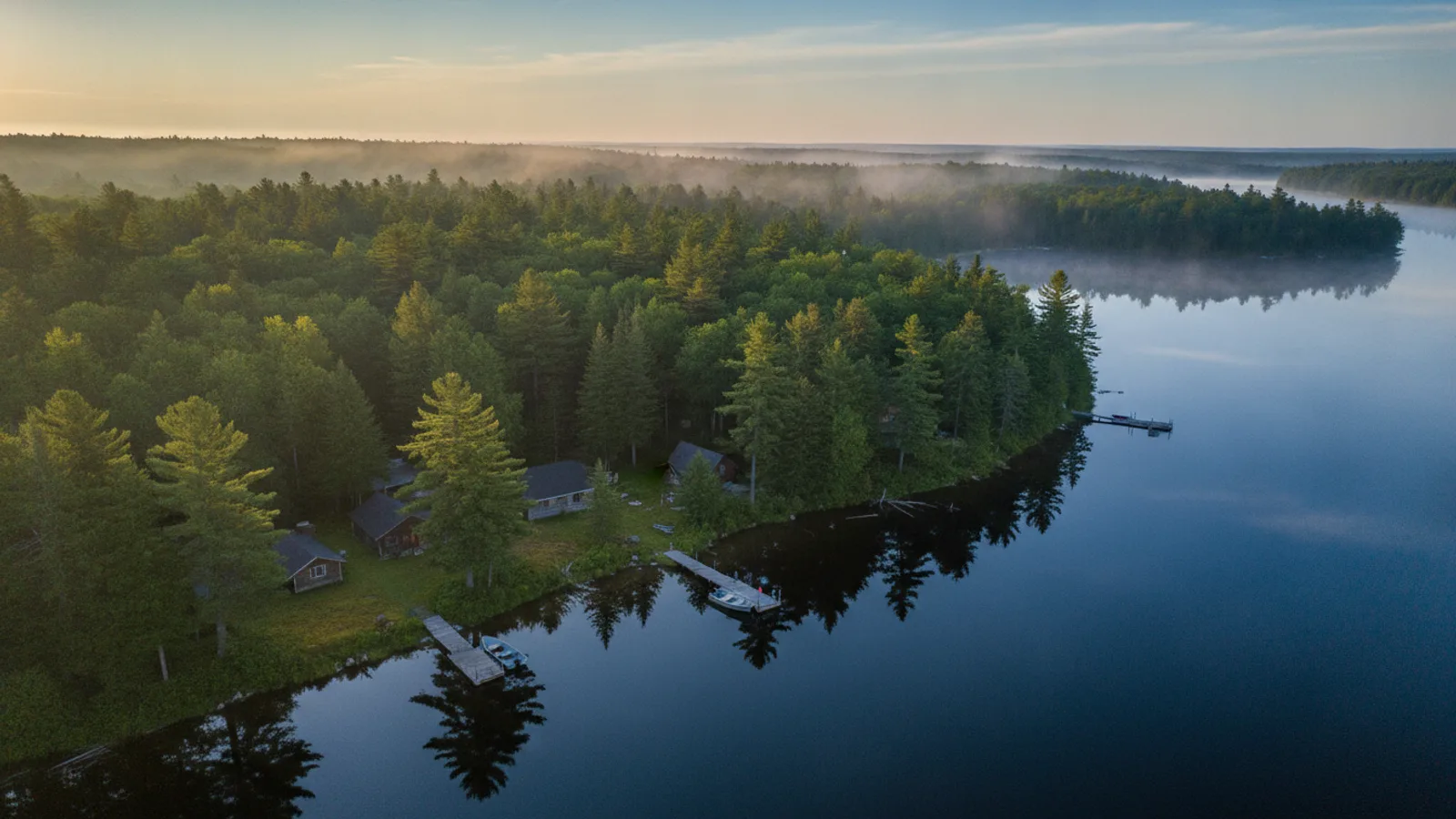
Say you’ve got an old two-room camp on a pond near Passadumkeag with a rusty steel holding tank under the lawn, and you’re tired of paying for pump-outs. A composting toilet might cut the volume going into that tank a lot. You’d still need to know the tank is sound, where it is and how grey water is handled, and the town LPI is the one to tell you what’s acceptable on that shoreline.
The real upkeep
This is the part the product pages gloss over. A composting toilet is a hobby you take on.
Emptying. Self-contained units fill, and you carry the chamber or container out and deal with it. How often depends on the unit and the number of people. A camp with weekend guests fills one faster than a retreat for two.
The liquid. Urine and liquid in a composting toilet have to go somewhere too. Some units separate it into a container you empty. Some use evaporation or a drain. Maine’s rules send any liquid overflow from a composting toilet to a disposal field, not onto the ground, so ask your LPI how liquids are handled on your lot.
Finished compost. After a long, warm, correctly managed composting period, the material is much reduced and looks like soil. But it’s still human waste, and a camp that’s cold for half the year may not reach that stage. The state rules say it has to be disposed of in a legal and sanitary way, and the details depend on your lot and the manufacturer instructions, so ask the LPI before you bury or spread anything. Don’t put it on a vegetable garden or near a well.
Bulking material. You’ll add a dry material every time. Running out means odor and a wet, poor-composting pile.
Ventilation. Most units have a vent pipe and a small fan to pull air through. Fans need power, and a cabin with no power needs a different setup.
Odor and pests. A properly working unit smells like damp earth, not an outhouse. A badly managed unit smells like an outhouse, and flies find it fast.
Winter at a camp with a composting toilet
Maine winters are hard on anything with liquid in it. A composting chamber that gets cold goes dormant, and anything wet can freeze and crack a container, vent line or drain.
If you close the camp for the season, empty the unit before you leave, deal with the liquid properly and drain any lines. Our camp opening and closing service and the post on winterizing a septic system when closing a camp cover what to do on the septic or tank side, and the same thinking applies to a grey water tank. A composting unit’s manual will have its own winter instructions, and those win over my general advice.
Come spring, a camp that’s been shut for months needs a check before the first guests arrive. If your grey water goes to a tank, make sure it isn’t full from a wet spring and that the lid is accessible. In March and April, mud season and posted roads can keep a truck off your road, so book early.
When a composting toilet makes sense
A composting toilet plus a small grey water setup tends to make sense when:
- The camp is used lightly, a few weekends and a couple of weeks a year.
- There’s no room or no soil for a full septic system, but a small grey water field might work.
- A holding tank costs you a lot to pump because the camp has a lot of toilet flushes and you want to cut volume.
- You’re comfortable handling the unit and the finished material yourself.
It makes less sense when:
- The camp is going year-round. In that case you’re likely looking at a full system, and the post on converting a camp to year-round septic covers the steps.
- Guests come in groups and nobody wants to deal with emptying it.
- The lot is small and near the water, and the LPI doesn’t allow a grey water field.
- You want a hands-off setup you can ignore.
Whatever you pick, a new or replacement system is a real cost. A conventional replacement commonly runs $12,000 to $25,000, and mound or engineered systems $25,000 to $40,000 or more. A composting toilet changes the picture only if the rest of the wastewater plan still works.
Where we fit
We don’t install composting toilets, design grey water fields or issue permits. A site evaluator and a licensed installer do the design and build, and the LPI permits and inspects.
What we do is pump holding tanks and septic tanks, inspect systems and tell you what we saw, locate tanks, check baffles and filters, and handle emergencies. A routine pump-out of a 1,000 to 1,500 gallon tank with an accessible cover runs $350 to $550, and an inspection runs $200 to $500. If your camp has a grey water tank or an old holding tank, we can pump it and tell you what we saw. Book a visit online or call (207) 300-9238.
Frequently Asked Questions
Are composting toilets legal in Maine?
Maine recognises composting toilets as a waterless option under its subsurface wastewater rules, but what’s allowed on your lot is decided locally. Talk to your town’s local plumbing inspector before you buy anything, especially if the camp is near water.
Does a composting toilet get rid of the need for a septic system?
Not by itself. A composting toilet handles toilet waste only. Sink, shower and laundry water, called grey water, still needs a legal place to go, such as a grey water disposal field or a holding tank.
Can I bury or spread the finished compost at my camp?
Don’t assume you can. Where finished material may go depends on local rules, the distance to water and wells, and the product manual. Ask your local plumbing inspector before you dispose of it on your land.
Can a composting toilet freeze in winter?
Yes. Liquid in the unit and any drain or vent line can freeze in an unheated camp. Most owners empty the unit and its liquid at closing and follow the manufacturer’s winter guidance.