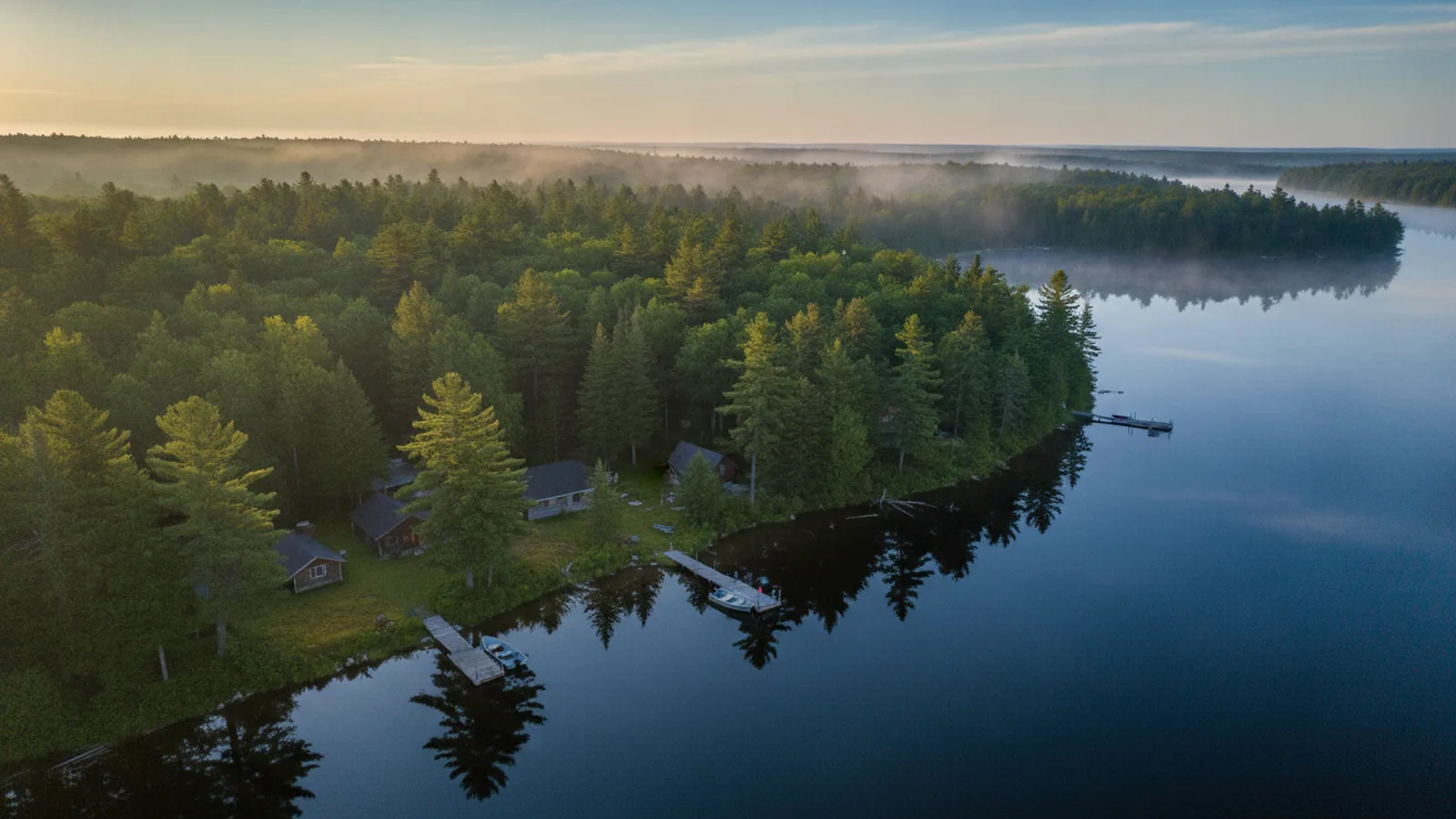
Opening camp is a ritual: turn on the water, check the mouse damage, sweep the deck. The septic system rarely makes the list — until the first weekend’s flushes have nowhere to go. Here’s the ten-minute septic check that belongs in your opening routine.
Before the First Flush
- Walk the tank and field area. Look for winter damage: settled or heaved ground over the tank, snowplow ruts, a cover that frost pushed proud of the grass. Any of those deserves a look before heavy use.
- Check the outlet area for surfacing water. Standing water or black, wet ground over the leach field in early spring can just be thaw — or the first sign of a field that didn’t survive the winter. Note it and re-check in a week when the ground dries.
- Open the cleanout (if you have one) and look. Water sitting high in the cleanout before anyone has used the plumbing means the line or tank is holding from last fall. Better to know now.
Restarting the System
A septic tank that sat all winter isn’t dead — the bacteria slow down in the cold but recover on their own. What they need is a gentle ramp-up, not a shock:
- Start with modest water use the first weekend. The tank’s biology wakes up over days.
- Skip the “spring septic treatment” additives. Normal use restarts the system; nothing in a jug does it better.
- Stagger the big loads. Don’t arrive, run four loads of laundry, and host ten people the same weekend the system is waking up.
Holding Tanks: Different Rules
Plenty of Maine waterfront camps run holding tanks, not full septic systems. If that’s you, opening-day math is simpler and stricter: the tank has whatever room it had when you closed. If you didn’t pump at closing, book the pump before the first big weekend, not after — and see closing-day winterizing for how to avoid the same scramble next spring. A holding-tank overflow at a shoreland camp isn’t just a mess — it’s the kind of event the code enforcement officer hears about.
When to Schedule the Pump-Out
Spring opening is the ideal pump-out window for camps on a 3-5 year cycle:
- The ground is soft enough to dig if the cover needs exposing, but the driveway is usually firm by mid-May
- The system gets its full season of use on an empty tank
- You’re ahead of the summer rush, when every pumper’s calendar fills with emergencies
If you can’t remember your camp tank’s last pump-out — a common situation with places that change hands in the family — make this the year you establish the baseline. One pump-out with a condition report tells you the tank size, the sludge rate, and the real interval your usage needs.
The Two-Minute Version
Walk the field, look in the cleanout, go easy the first weekend, and book the pump if you’re past year three or can’t remember. Come October, the same discipline runs in reverse — see winterizing a septic system when you close camp. That’s the whole discipline — and it’s the difference between a camp season spent on the dock and one spent waiting for a truck.
Opening a camp in the greater Bangor region? Call (509) 351-8404 — spring openings and scheduled pump-outs are core service, no travel surcharges.