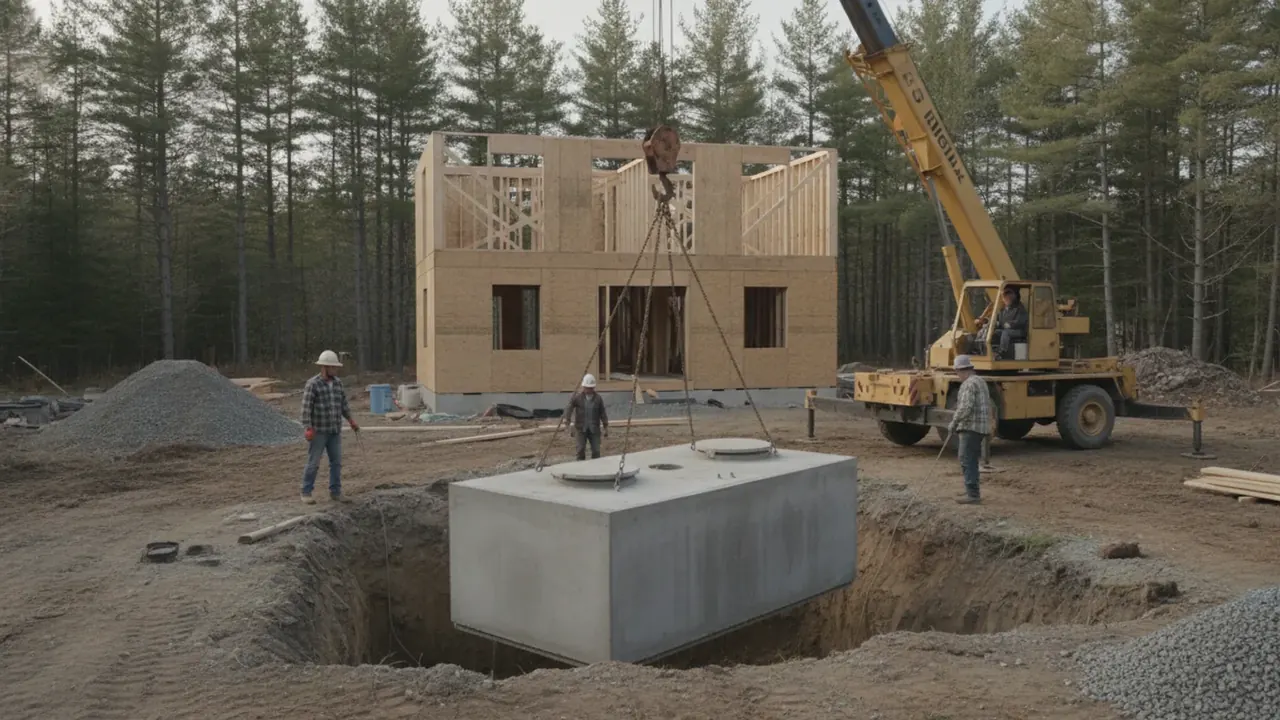
Mike in Brewer called us convinced his tank needed pumping every eighteen months because “something was wrong with it.” Nothing was wrong with it. He’d added a fourth bedroom during a renovation eleven years earlier and never touched the septic system. He was still running a 750 gallon tank sized for a two-bedroom house, on a household of five. The tank wasn’t broken. It was just too small for the life happening above it.
That’s the thing about septic tank size — most homeowners never think about it until something forces the question, and by then they’ve usually been paying for it in the form of extra pump-outs, slow drains, or a system limping along under a load it was never built to handle. Here’s how sizing actually works in Maine, how to find out what you’ve got, and what to do if the number doesn’t match your house.
Tank Size Is Set by Bedrooms, Not People
This surprises almost everyone the first time we explain it. Maine’s Subsurface Wastewater Disposal Rules, enforced through your local plumbing inspector and the state program, size septic tanks off bedroom count, not the number of people living in the house. A family of six in a 3-bedroom house and a retired couple in that same 3-bedroom house are legally required to have the same minimum tank size.
The logic makes sense once you sit with it. Bedroom count is a reasonably stable proxy for a home’s maximum occupancy over its lifetime — you can’t regulate how many people actually live somewhere, but you can regulate how many people the house is built to sleep. It also means a home’s “correct” tank size doesn’t change when your kids move out, but it absolutely should change if you finish a basement bedroom or convert a den into a fifth bedroom, because now the house is rated for more people than the tank was ever designed to serve.
The Bedroom-to-Gallon Chart
Here’s the standard sizing table used across Maine for typical single-family homes with a garbage disposal not in heavy use. These are minimums — some towns, lots with tight setbacks, or systems serving a business alongside a residence require larger tanks.
| Bedrooms | Minimum Tank Size | Typical Household |
|---|---|---|
| 1–2 | 750 gallons | Small home, camp, couple |
| 3 | 1,000 gallons | Most standard single-family homes |
| 4 | 1,250 gallons | Larger family home |
| 5 | 1,500 gallons | Large family home, multi-generational |
| 6+ | Engineered sizing required | Custom design, often two-compartment or larger |
Garbage disposals push these numbers up in some jurisdictions because ground food waste adds solids volume the tank has to handle. If your home has one and was permitted decades ago before that was standard practice, it’s worth confirming your tank actually accounts for it — we cover that trade-off in more depth in our piece on garbage disposals and septic systems.
Why Size Drives How Often You Pump — and What You Pay
A tank isn’t just a container, it’s a settling chamber. Wastewater flows in, solids sink to the bottom, grease and lighter material float to the top, and the relatively clear water in the middle exits to the drain field. The bigger the tank, the more time that water has to sit still before it leaves, and the more room there is for sludge to accumulate before it starts creeping toward the outlet baffle and out into your field — which is exactly where you don’t want it.
An undersized tank for the household it serves fills up faster, plain and simple. That means shorter intervals between pump-outs, and because Bangor-area pumping is typically priced per visit rather than per gallon, more visits means more money over the life of the system. We break down what a single visit runs in our septic pumping cost guide, but the bigger-picture number is the one that matters here: a right-sized tank pumped every three to five years will almost always cost less over a decade than an undersized tank limping along on eighteen-month cycles. If you’re not sure where your household falls, our pumping frequency guide walks through the factors, and the cost calculator can give you a ballpark for your specific tank size.
How to Find Out What Size Tank You Actually Have
You have three realistic ways to figure this out, in order of easiest to most reliable.
Check your HHE-200 form. Every legally permitted septic system in Maine has an HHE-200 subsurface wastewater application on file, either with your town office or the state program, and it lists the tank size, design flow, and system layout that was originally approved. We wrote a full walkthrough of how to track this down in our guide to Maine septic records and the HHE-200 form — it’s usually the fastest way to get a real number without digging in the yard.
Ask at your next pump-out. When our crew uncovers your tank to pump it, we measure it and can tell you the size and condition on the spot. This is the most reliable method if your paperwork is missing, incomplete, or if you suspect an addition was made that isn’t reflected in the original permit.
Look for a stamp on the lid. Many concrete tank lids have the gallon size cast right into the concrete. It’s not guaranteed — older tanks especially may not have it — but if you’re already uncovering the tank for another reason, it’s worth a look. Never enter or lean into an open tank to check this; the fumes inside are dangerous. If you’re not sure where your tank even sits on the property, our guide on how to find your septic tank covers the safe methods for locating it before you dig anything up.
When the Size Doesn’t Match the House
Linda in Orono bought an older camp-turned-year-round home near the lake with no idea what was under the yard. Her HHE-200 search came back empty — the system predated modern permitting requirements entirely, which is common on older shoreland lots around here. When we pumped it, we found a tank that looked to be somewhere around 600 gallons serving what was now a full-time 3-bedroom household. Technically undersized, and it explained why she’d been fighting slow drains every spring.
If you find yourself in that spot — undersized tank, mismatched bedroom count, or a system old enough that nobody’s sure what’s down there — you generally have two paths. If the tank is structurally sound and just running a shorter interval than you’d like, the cheapest fix is simply adjusting your pumping schedule to match reality rather than the standard three-year rule of thumb. If the system is failing, cracked, or the drain field is showing its age alongside an undersized tank, replacement becomes the more honest conversation, and our guide to new septic system costs in Maine lays out what that investment looks like.
Either way, this isn’t a guess-and-hope situation. Local soil conditions matter too — heavier clay and ledge, which we see plenty of around Old Town and out toward Penobscot County, can affect how a system is designed even when bedroom count is identical to a neighbor’s house. The state’s own guidance through the Maine Subsurface Wastewater Program covers the full sizing rules if you want to read the source material yourself.
Get an Honest Read on Your Tank
If you don’t know what size tank sits under your yard, that’s a normal thing to not know — most homeowners don’t, until a slow drain or a suspiciously frequent pump-out forces the question. We measure tank size on every visit, we’ll tell you straight if it matches your bedroom count, and we’ll tell you just as straight if it doesn’t and what your real options are. No upselling a bigger tank you don’t need, no ignoring one you do.
Give us a call at (509) 351-8404 or book your visit online and we’ll get you a real answer, not a guess.
Frequently Asked Questions
What size septic tank does a 3 bedroom house need in Maine?
A standard 3 bedroom home in Maine typically requires a minimum 1,000 gallon septic tank under state subsurface wastewater rules. Some towns or well setback situations may require larger.
How do I find out what size septic tank I have?
Check your HHE-200 subsurface wastewater application on file with the town or the state, ask your pumping company to measure it at your next pump out, or look for a tank size stamp on the concrete lid once it is uncovered.
Can a septic tank be too big for a house?
Yes, an oversized tank is not harmful, it just holds more before needing to be pumped. An undersized tank for the bedroom count is the real problem because solids move into the drain field faster.
Does a bigger septic tank mean fewer pump outs?
Generally yes. More gallons of holding capacity means more time before solids build up enough to need pumping, which is why undersized tanks for a household often need service more often than the standard three year interval.