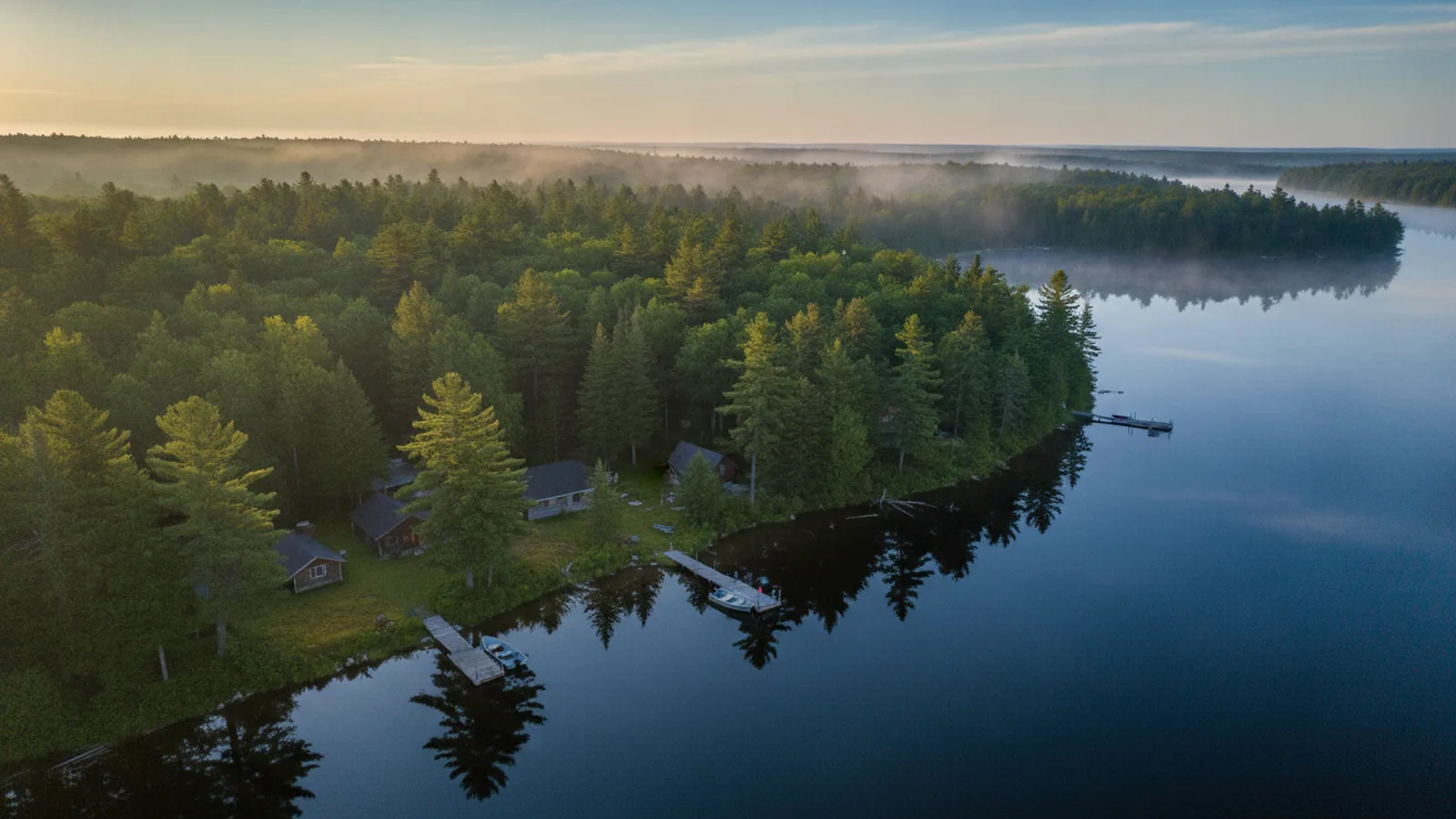
Sixty-two feet. That was the distance from the edge of a Glenburn camp’s drain field to the normal high-water line of Pushaw Lake, and the owner had no idea it mattered until the field stopped taking water in June. The system had run fine for thirty years, and the Saturday emergency pump-out that bought them a few weeks ran $650 to $850. The problem wasn’t the tank or the pump. It was that a replacement had to meet today’s Maine shoreland zoning septic setback rules, and those rules want that field 100 feet back from the water.
That gap between where old camp systems sit and where new ones are allowed to go is the single biggest reason lakefront septic work in Penobscot County gets complicated and expensive. If you own a camp on Pushaw, Hermon Pond, Chemo Pond, or anywhere along the Penobscot River, this is the thing worth understanding before your system forces the conversation.
What the Shoreland Zone Actually Is
Maine draws a line around its water bodies, and everything inside that line gets extra rules. The state’s mandatory shoreland zoning program sets the boundary at:
- 250 feet, measured horizontally, from the normal high-water line of a great pond or a river
- 250 feet from the upland edge of a coastal wetland or a mapped freshwater wetland
- 75 feet from the normal high-water line of certain streams
If your camp sits inside those distances, you are in the shoreland zone. That’s not a soil condition or an opinion, it’s a mapped district in your town’s ordinance, and your local code enforcement officer can tell you which one your lot falls in within about five minutes.
Here’s the part people get wrong. Being in the shoreland zone is not the same as violating a setback. The 250-foot line just means your town’s shoreland ordinance applies on top of the state’s subsurface wastewater rules. The actual septic setbacks are shorter numbers measured from the water, and those are what a new system has to hit.
Two rulebooks, two different jobs. The state’s subsurface rules say how far the tank and field must sit from water, wells, and property lines. The town’s shoreland ordinance says what you may build, clear, or disturb inside the zone. A lakefront septic replacement usually needs both to say yes.
Not sure which category your camp lands in? Give us a call at (207) 300-9238 and we can usually tell from the address and a look at the lot whether you’re dealing with a routine job or a shoreland one.
Maine Shoreland Zoning Septic Setback Distances, in One Table
These are the baseline numbers most Penobscot County camps run into. Treat them as the starting point, not the final word, because a town ordinance can be stricter and difficult soils can push a designer further back on their own.
| What you’re measuring | Common minimum distance | Why it matters |
|---|---|---|
| Disposal field to a great pond, river, stream, or coastal wetland | 100 feet from the normal high-water line | The core setback most lakefront replacements have to hit |
| Septic tank to those same water bodies | 50 feet | Tanks are watertight, so the rule is tighter on the field than on the tank |
| Tank or field to a drilled or dug well | 100 feet | Covered in depth in our well and septic distance guide |
| Field to a property line | 10 feet | Small camp lots usually run out of room here first |
| Shoreland zone boundary, great ponds and rivers | 250 feet | Everything inside this line falls under the town shoreland ordinance |
| Shoreland zone boundary, certain streams | 75 feet | Easy to miss, because the brook may only run in spring |
The measurement that trips people up is “normal high-water line.” That’s not where the water sat last Tuesday. It’s the line where the ground and vegetation change character from years of being underwater, and on a lake with a dam it can be well up the bank from a low August waterline. Measuring from the wrong line by fifteen feet can be the difference between a design that works and one that doesn’t.
There’s also a vertical setback that gets less attention and causes just as much trouble: separation from groundwater and from ledge. On a lakefront lot the water table is often high in spring, which is exactly when your soil has to be able to take effluent. We wrote about that problem in more detail in the high water table septic guide, and the ledge version of it in the septic on ledge guide.
Why So Many Old Camps Sit Closer to the Water Than the Setback Rules Allow
Most camps around Bangor were built before any of this existed. A lot of the systems near Pushaw and Hermon Pond went in during the fifties and sixties, when the design standard was “downhill from the camp and out of sight.” Some are cesspools. Some are a steel tank and a short run of perforated pipe. Plenty sit forty or fifty feet from the water because that’s where the digging was easy.
Those systems are generally grandfathered, meaning the state doesn’t make you tear out a working system just because the rules changed. That protection is real, and it’s narrower than most owners assume. It covers the system you have, in the condition it’s in, serving the camp as it exists. We go through the limits of that in the grandfathered septic system guide.
Three things end grandfathering: the system fails, you increase the design flow, or you replace it voluntarily. The second one catches people. Adding a bedroom, finishing a loft, or converting the camp to year-round living all raise the flow the system is rated for, and that triggers a new design under current setbacks. If you’re thinking about that conversion, read the camp to year-round septic guide before you call a builder.
A couple in Orono learned the stream rule the hard way. Their lot ran back from a small brook that fed Pushaw Stream, dry most of August, so nobody thought of it as a water body. It was, and the 75-foot shoreland line crossed the only flat part of the yard. The finished design worked, but it cost them a $200 to $500 inspection, a full site evaluation, and about six weeks they hadn’t budgeted for.
When a Lakefront System Fails and the Shoreland Setback Won’t Fit
This is the scenario that scares camp owners, and it’s worth walking through in order, because there’s almost always a path.
Step one is a licensed site evaluator. In Maine, only a licensed site evaluator can design a subsurface system and file the HHE-200 application. They’ll dig test pits, log the soil, and hunt for anywhere on the lot that can hold a field at full setback. Our soil test and site evaluation guide covers what that day looks like, and the HHE-200 records guide explains the paperwork the town keeps on file.
Step two is design creativity. Getting to 100 feet on a narrow camp lot often means moving the field uphill and behind the camp, which means pumping effluent uphill instead of letting gravity do it. That’s a pump chamber and a pressure line, and it works well. It also adds a mechanical part that eventually wears out, which is why we wrote about effluent pump replacement cost. Raised or engineered fields solve the vertical separation problem the same way, by importing sand instead of finding it.
Step three is a variance. When the lot genuinely can’t fit a compliant design, Maine’s rules allow reduced setbacks for a replacement system. Small reductions can often be approved by the local plumbing inspector. Larger ones go to the state. Variances are more common for replacements than for new construction, precisely because the alternative is an old failing system continuing to leak toward a lake.
Step four is a holding tank. If nothing else works, some towns will permit a holding tank as the last option: a sealed vault with no field at all, pumped on a schedule. It’s legal, it protects the water, and it’s a real ongoing expense. Our holding tank versus septic comparison lays out the honest math on how fast that adds up for a family that uses the camp all summer.
The whole approval sequence, evaluator to permit to installer, is mapped out in the Maine septic permit process guide. Plan on it taking longer than you want in a busy summer.
What This Costs, and What to Do Before You Get There
The single cheapest move available to a lakefront camp owner is keeping the existing system alive as long as possible, because every year the old system keeps working is a year you don’t pay for a shoreland replacement.
Here’s what the maintenance side actually runs in our area:
- A standard pump-out on a 1,000 to 1,500 gallon tank with an accessible cover: $350 to $550, with no travel surcharge anywhere in Penobscot County
- A septic inspection with tank and field evaluation: $200 to $500
- Emergency or after-hours service when a camp backs up on a Saturday in July: $650 to $850
- Winter access surcharge, when we’re dealing with snow, frost, or a plowed-in cover: $100 to $300
Most households should pump every three to five years. Camps get a little more leeway because they’re used seasonally, but a busy summer place with a full house every weekend can hit the same load as a year-round home. If you host more people than the system was designed for, look at the extra guests and septic load guide before you assume the camp can absorb it.
A Hermon Pond owner we serve had a system installed in 1979 sitting close to the water. Instead of waiting for it to fail, they went on a two-year pumping cycle at $350 to $550 a visit and had us inspect the tank baffles at the same time. That system is still running. Compared to the cost of a shoreland-compliant replacement with a pump chamber, that maintenance bill is not a close call.
The other thing that buys years is watching the water going in. Lakefront lots have the least soil margin, so hydraulic overload hits them first. Fixing a running toilet or adding low-flow fixtures matters more here than it does on a two-acre lot in Levant. Same for water softener discharge if you have one.
Book a pump-out or an inspection through our booking page, or call (207) 300-9238 and tell us it’s a camp on the water. We’ll bring the right hose length.
Where to Stop and Call a Professional
Some of this you can do yourself. Most of it you shouldn’t.
You can measure your own setbacks with a tape and a printed lot map. You can call your town’s code enforcement officer and ask which shoreland district you’re in. You can pull your HHE-200 from the town office. You can watch for soggy ground and slow drains, and you can keep a log of when the tank was pumped.
Stop at these three:
- Opening or entering a tank. Septic gas can knock you out in seconds and it has killed people in Maine. Never lift a lid to look, never lean in, and never send anyone down.
- Electrical work on pumps, floats, or alarms. Effluent pumps run on line voltage sitting in a wet chamber. That’s a licensed job, always.
- Any excavation. Digging on a lakefront lot without a permit can turn a repair into an enforcement action under the shoreland ordinance, and digging over a field can crush what’s left of it. Also worth reading if you’re clearing snow near the system: our guide on plowing and driving over a septic system.
For a broader look at how long these systems last before any of this becomes urgent, see how long a septic system lasts. And if your camp is on a seasonal schedule, our camp opening and closing service handles the spring and fall side of it. EPA also keeps a solid plain-English overview of septic system basics if you want the national picture.
Frequently Asked Questions
How far does a septic system have to be from a lake in Maine?
As a baseline, Maine subsurface rules keep a disposal field at least 100 feet back from the normal high-water line of a great pond, river, stream, or coastal wetland, and the septic tank itself at least 50 feet. Local shoreland ordinances can require more, so the exact number for your lot comes from your municipal code officer and the licensed site evaluator who designs the system.
What counts as the shoreland zone in Maine?
The shoreland zone is the land within 250 feet of the normal high-water line of a great pond, river, or coastal wetland, within 250 feet of the upland edge of a mapped freshwater wetland, and within 75 feet of certain streams. Any septic work inside that strip falls under both state subsurface rules and your town shoreland ordinance, which means two sets of paperwork instead of one.
What happens if a lakefront septic system fails and can’t meet the setbacks?
The system has to be replaced under current rules, so a licensed site evaluator looks for any spot on the lot that works, often using a raised or engineered design to gain separation from groundwater. If nothing fits, the next step is a variance through the local plumbing inspector or the state. If that also fails, the fallback is a holding tank that gets pumped on a schedule.
Does a grandfathered camp septic system still have to meet current setbacks?
An existing system can usually stay where it is while it keeps working, even if it sits closer to the water than current rules allow. Once it fails, or once you expand the camp in a way that raises design flow, the replacement has to meet current setbacks as closely as the lot allows. Grandfathering protects the system you have, not the one you’ll need next.