Dave in Hampden called us in March, annoyed. He had just paid his pumping bill and noticed a line item for $125 marked “excavation.” Same tank he had pumped two years before, same truck, same crew — but this time the ground was still half-frozen and the access lid was buried under eight inches of lawn and a foot of Maine mud season muck. The crew spent forty minutes digging with shovels before they ever got a hose in the tank. That forty minutes is what he paid for.
A septic riser would have made that fee disappear. Permanently.
What a Riser Actually Is
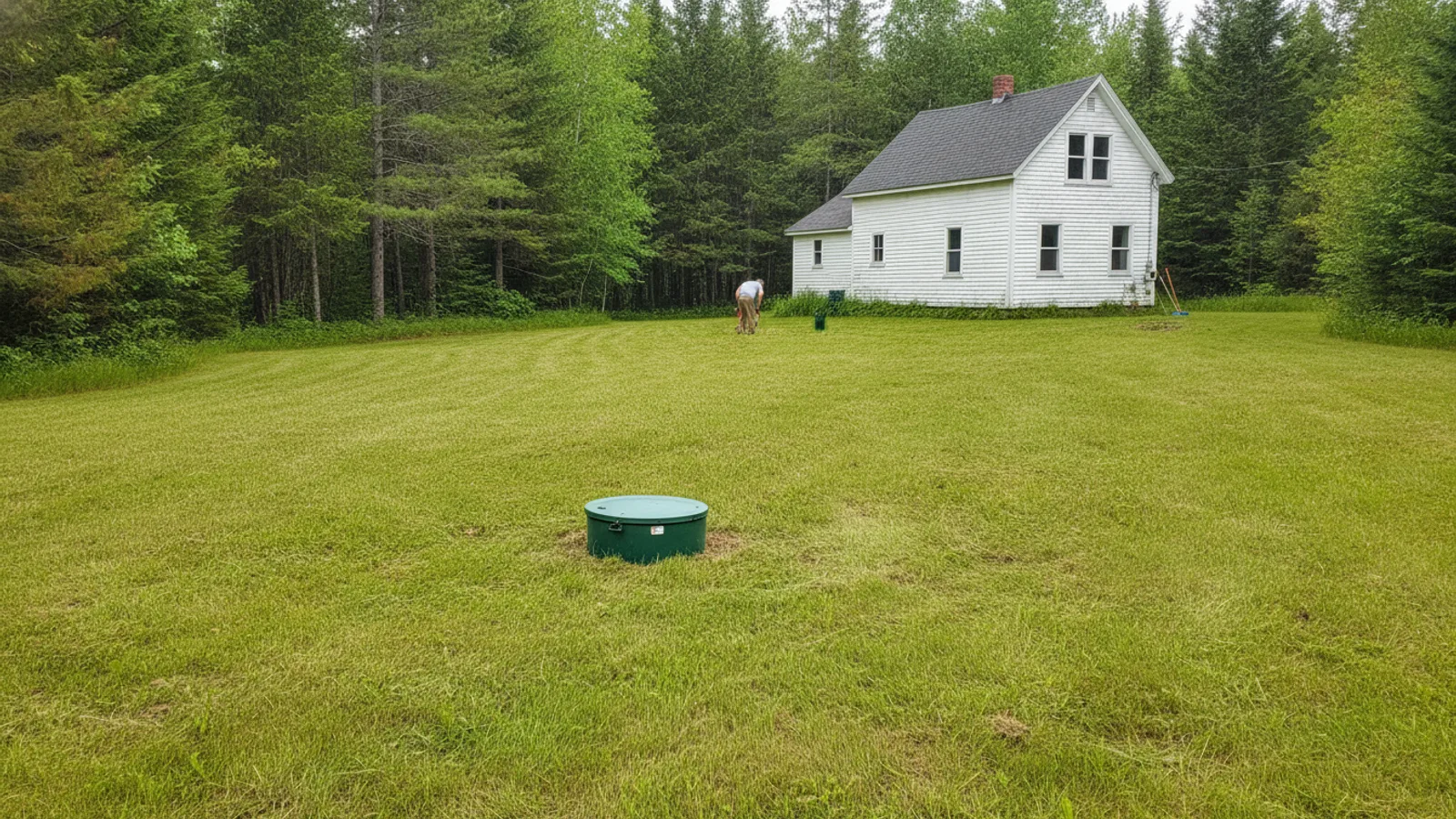
A riser is a rigid pipe, usually 20 to 24 inches across, that sits on top of your septic tank’s access opening and extends straight up to ground level. A locking lid caps it off flush with the lawn. Instead of digging down through soil every time the tank needs service, the crew pops the lid, drops the hose, and gets to work. No shovel, no guesswork about exactly where the tank lid is buried, no lawn scars to patch afterward.
Most tanks in the Bangor area were installed with the access lid a foot or more below grade, sometimes closer to two feet on older systems. That soil gets backfilled, grass grows over it, and five years later nobody remembers the exact spot — including the original installer’s notes, if they still exist at all. Every pump-out starts with a search-and-dig operation unless something marks the spot for you.
What It Costs, and When to Do It
In the Bangor, Brewer, Hampden, Old Town, and Orono area, a single riser with a locking lid installed runs about $200 to $400. Most residential tanks only need one riser over the main access. If your tank has a separate, accessible outlet baffle with an effluent filter, a second smaller riser there adds a bit more but is worth bundling in while the crew already has the hole open.
| When You Install | Typical Cost | Why |
|---|---|---|
| During a scheduled pump-out | $200 – $400 | Tank is already exposed and dug up, no separate mobilization |
| As a standalone job | $350 – $600 | Crew has to dig, locate, and backfill on its own trip |
| New system install | Often included or a small add-on | Installer is setting the tank anyway |
That first row is the one that matters. Installing a riser during a pump-out you were already paying for is the cheapest way this job ever gets done, because the digging is already sunk cost. Once the crew has your tank uncovered, the marginal cost of setting a riser instead of just filling the hole back in is small. Wait and call for it as its own visit later, and you are paying full mobilization and full excavation for a job that could have ridden along with work you were doing anyway.
The Digging Fee You Are Actually Paying For
Every pumping company in Penobscot County that quotes an honest, itemized price includes a locate-and-dig charge for buried access lids, typically $50 to $150 depending on depth, soil, and how close the guess is to reality. That’s the tell worth paying attention to when you compare quotes: the lowest number on the phone often assumes an easy dig, and the invoice at the end tells a different story once a shovel hits clay or ledge.
Winter and mud season make it worse. Frozen ground in January can turn a routine dig into a pickaxe job. Wet clay in April sticks to everything and takes twice as long to move and twice as long to backfill clean. If you’ve ever wondered whether you can even pump a septic tank in winter in Maine, digging is usually the harder part of that question, not the pumping itself. A riser sidesteps the whole problem. The lid is right there, at grade, year-round, frozen ground or not.
Linda in Orono has a lakeside camp with mature landscaping around the tank area — hostas, a stone border, the works. Her first pump-out before she owned the place involved digging through a flower bed to find the lid, then patching it back together looking worse than before. She had a riser installed at her next service. Now the lid sits flush with a small mulched ring she built around it on purpose, and nobody touches the hostas again.
The Payback Math
This is where a riser stops being a nice-to-have and starts being an obvious financial call.
- One dig fee avoided per visit. At $50 to $150 per pump-out, and pumping happening roughly every 3 to 5 years for most households, a riser pays for itself in two to three visits — often faster if your access has been an especially bad dig.
- No lawn repair. Digging and backfilling by hand rarely puts your grass back exactly as it was. Reseeding or patching sod is a cost most people never put on the ledger but pay anyway, in time if not dollars.
- Faster emergency response. If you ever have a backup or need someone out same-day, a crew that can find and open your tank in two minutes instead of forty gets your problem solved faster. That matters most exactly when you can least afford the delay.
- Easier inspections. A quick visual check, a filter cleaning, or a pre-sale septic inspection all go faster and cheaper with a lid that’s already at grade instead of buried.
Run the numbers on a typical five-year pumping cycle. A $300 riser installed at today’s pump-out, against $100 in avoided digging fees at each of the next three or four pump-outs over 15 to 20 years, is not a close call. It is one of the very few home upgrades that pays for itself in cash, not just convenience.
Plastic vs. Concrete
Almost every pumping company installs plastic risers now, usually HDPE or heavy-duty polyethylene, and there’s a good reason: Maine’s freeze-thaw cycles are brutal on rigid materials. Concrete risers exist and some older systems still have them, but concrete cracks over time as the ground heaves and settles each winter, and a cracked riser lets groundwater and surface runoff into your tank, which throws off the whole system’s hydraulics.
Plastic flexes slightly with ground movement instead of cracking. It’s also far lighter, which means the crew can set it level and true without wrestling a slab of concrete into a hole. A quality plastic riser comes with a locking or bolted lid designed specifically to keep the cover secure against kids, pets, mowers, and curious wildlife while still being fast for a technician to open.
If your property still has an old concrete riser or cover that’s showing cracks or has settled unevenly, swapping it for plastic during your next pump-out is a smart line item to ask about.
What to Ask For
When you’re scheduling your next pump-out, mention the riser up front rather than after the crew has already dug and backfilled. Ask specifically for:
A locking lid, not just a cap that sits loose. This keeps the access secure between visits.
The correct diameter for your tank’s opening, typically 20 or 24 inches, so the fit is tight and doesn’t leave gaps for soil or water to work into.
Grade-level or slightly above-grade installation, so mowers and lawn equipment clear it without the family running over a hidden nub every summer.
If you want a sense of what the whole visit will run with a riser added, our septic pumping cost calculator lets you plug in your tank size and get a straight number before anyone shows up.
The Bottom Line
A riser is a small, one-time cost that turns every future visit into a faster, cheaper, cleaner job. It is the rare septic upgrade where the payback is almost guaranteed rather than theoretical. If your pumper has been digging up your lawn every visit, ask about a riser the next time they’re already on site — it’s the cheapest that job will ever be.
Ready to get one installed on your schedule? Call us at (509) 351-8404 or book your next pump-out online and we’ll set the riser while the tank is already open. For more on Maine’s rules around septic access and maintenance, the Maine Subsurface Wastewater Program and the EPA’s septic systems guidance are both solid references.
Frequently Asked Questions
How much does a septic riser cost in Maine?
A standard 20 to 24 inch riser with a locking lid installed during a scheduled pump-out runs about 200 to 400 dollars per lid in the Bangor area. A tank usually needs one or two risers, one over the main access and sometimes a second over the outlet baffle.
Do I need a riser on both ends of the tank?
Not always. Most homeowners only riser the main pumping access. If your tank also has an accessible outlet baffle with a filter, a second smaller riser there is worth adding at the same time since the crew is already on site.
Is plastic or concrete better for a septic riser?
Plastic (HDPE or polyethylene) is what almost every pumper installs now. It will not crack from Maine frost heave, it is lighter to set correctly, and it comes with a proper locking lid. Concrete risers exist but they are heavier, more prone to cracking with our freeze-thaw cycles, and rarely worth the extra cost.
Does a riser mean anyone can open my septic tank?
No. A proper riser installation includes a locking or bolted lid, not an open pipe. It gives your pumping company safe, fast access while keeping kids, pets, and wildlife out. Never open or enter a septic tank yourself, riser or not, because the gases inside can be fatal.