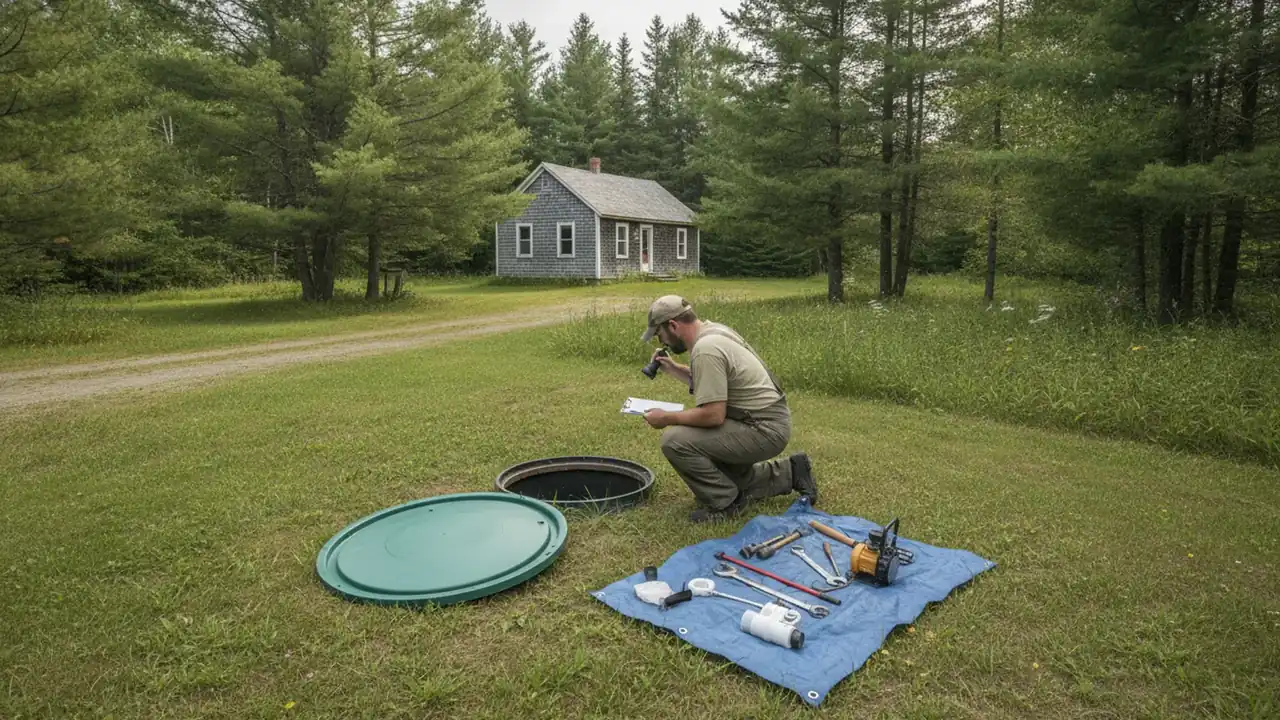
Ask ten homeowners in Penobscot County when their septic tank was last pumped and most will give you a number that starts with "I think." That answer is the reason drain fields fail early. Not neglect exactly — just a maintenance interval measured in years, on a system nobody can see, with no dashboard light and no reminder.
A maintenance plan moves that job off your memory and onto ours. We set the interval, we track it, and we call you.
What's Actually in the Plan
- An interval set from your system, not a rule of thumb. Tank size, household size, whether you run a garbage disposal, whether the place is year-round or seasonal. Our pumping frequency guide explains how those inputs move the number.
- A call when you're due. You don't track it. We do.
- A complete pump-out every visit — full sludge and scum removal from every compartment, backflushing to break up compacted solids, not just the easy liquid off the top.
- A baffle and effluent filter check while the tank is open. The cheapest inspection you will ever get is the one that happens during a pump-out you were having anyway.
- A written condition note: tank size, sludge depth, anything developing, and the honest recommendation for your next interval.
- A service history that follows the property. That matters more than people expect at closing time — see Maine septic inspection rules when selling.
What It Costs, and What It Saves
The pump-out itself costs what it always costs: $350 to $550 for most Bangor-area homes with a standard tank and accessible cover. A plan doesn't change that number. Check yours in under a minute with the cost calculator, or read the full Maine pumping cost breakdown.
What a plan changes is the expensive column:
- Emergency calls. A tank that goes into a Maine winter overdue comes out of it as a January emergency. Scheduled service happens in warm-season daylight, at warm-season prices — the winter pumping guide covers the difference.
- Drain field replacement. A tank that goes unpumped long enough carries solids out to the trenches, and that field runs $5,000 to $15,000 to replace. Every routine pump-out is buying insurance on that number.
- Digging for a buried cover. Once we've found and documented your access — or fitted a riser — nobody is probing a frozen lawn to locate it again.
Between Visits
Maintenance isn't only the truck showing up. The habits that decide a system's lifespan happen daily, and the short version is: keep water and solids out that don't belong in there. Our Maine maintenance schedule lays out daily, annual, and multi-year tasks. The two that matter most:
- Keep clean water off the field. Roof runoff, sump discharge, and a running toilet all flood a drain field with water that never needed treating.
- Skip the additives. They don't work, and we explain exactly why in do septic tank additives work.
Camps and Seasonal Properties
Lakeside camps run on their own calendar, so their maintenance does too: spring opening, fall closing, and holding-tank service scheduled around when you're actually up. See camp opening and closing, plus the winterizing guide for what happens to an unused system in a Maine February.
Start a Plan
Tell us your tank size and roughly when it was last pumped — "I think about five years ago" is a perfectly normal starting point. We'll set the interval from there. Serving Bangor, Brewer, Hampden, Old Town, Orono and all of Penobscot County, with no travel surcharges. Not sure whether you're overdue right now? Start with the nine warning signs.
Put Your Tank on a Schedule
Give us your name and number and we'll work out your interval on the call — tank size and rough last-pumped date is all it takes. Or skip the form: call or text (207) 300-9238.