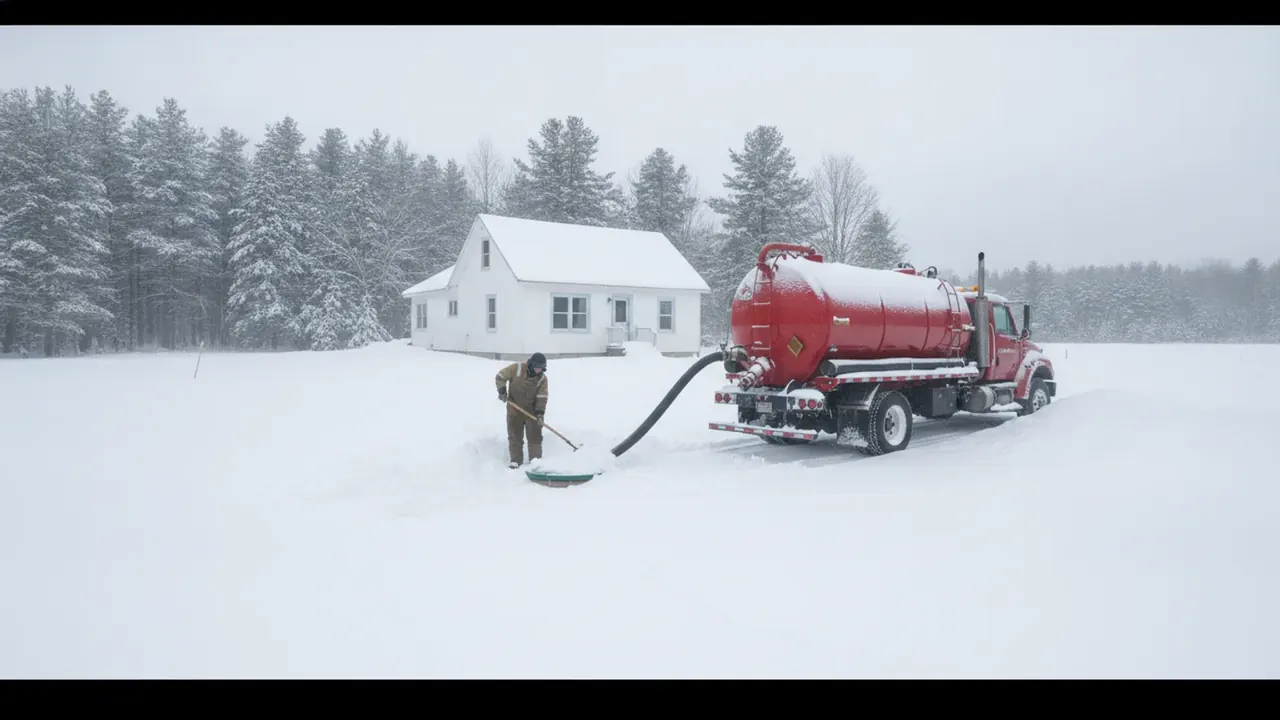
Linda in Orono called us on a Tuesday in January, snow up past her knees, because the alarm in her basement had started chirping the week before and she’d been hoping it would just stop. It didn’t. We got a truck out to her two days later, and yes, we pumped her tank in the dead of winter, ledge and all. It cost her about $200 more than it would have in October, and it took an extra forty-five minutes on site. So the short answer to “can you pump a septic tank in winter in Maine” is yes. The real question is whether you want to.
Yes, It Can Be Done — Here’s What Changes
A pumping truck doesn’t care what season it is. The hose still sucks, the tank still empties, the math doesn’t change. What changes is everything around the job.
Finding the lid. In summer you can eyeball a slight depression in the lawn or check your old permit sketch and be digging within five minutes. In February, that same spot is under a foot of snow and the ground beneath it might be frozen solid for the first 8 to 12 inches. Someone has to shovel first, then sometimes chip through frost with a mattock or a torch before the tank cover even shows itself.
Slower trucks, longer routes. Rural roads around Glenburn, Eddington, and Hermon get plowed, but driveways don’t always get the same treatment. A loaded pump truck weighs a lot, and nobody wants to slide it into a ditch on an unsalted camp road. Drive times stretch, and so does the appointment window.
Equipment care. Hoses stiffen in the cold. Valves and fittings that seat easily in July can freeze up or crack if they’re not warmed and handled carefully. A good crew brings extra time and extra care for exactly this reason, not because the pumping itself is harder.
Add it all up and you’re usually looking at $100 to $300 on top of a normal pump-out, depending on snow depth, how deep the lid is buried, and how far off the plowed road your system sits. If you want a general baseline before the winter surcharge, our septic pumping cost guide for Maine walks through standard pricing by tank size.
When Winter Pumping Is Actually Unavoidable
Nobody plans a January septic call. It happens because something forced the issue.
The tank is full and backing up. If sinks are draining slow, the toilet is gurgling, or sewage is coming up in a floor drain, that’s not a “wait until spring” situation. A backup left untreated can damage your drain field, and a frozen, backed-up system is genuinely miserable to live with. If you’re seeing any of that right now, our guide on what to do when a septic system is backing up covers the immediate steps — but the tank still needs to be pumped, and that means a winter call.
You’re selling or closing on a house. Real estate deadlines don’t pause for snow. If a Maine inspection or a lender requirement means the tank needs pumping before a February closing in Hampden or Old Town, it gets pumped in February.
The alarm is going off and you don’t know why. Like Linda, plenty of homeowners get an alarm and assume it can wait. Sometimes it can. Sometimes the tank is genuinely at capacity and the alarm is the only warning you get before a backup.
Never try to open or check the tank yourself to diagnose the problem, winter or not — the gases inside a septic tank can be lethal in seconds, and a snow-covered lid hides the opening even further. That’s a call for a licensed crew every time.
Outside of those situations, winter pumping in Maine is avoidable, and avoiding it is the smarter move almost every time.
Why Fall Scheduling Is Just Smarter
Here’s the thing about septic maintenance: it’s one of the few home systems where the smart owners and the reactive owners pay wildly different amounts for the exact same service.
Dave in Hampden has his tank pumped every October, right after he winterizes his sprinklers. Twenty minutes, standard rate, done before the ground even thinks about freezing. Mike in Brewer put it off two winters in a row and ended up making an emergency call in late December both times — full winter surcharge, plus the stress of a house with slow drains during the holidays.
| Scheduling window | Typical cost impact | Ground condition | Wait time |
|---|---|---|---|
| September–October | Standard rate | Soft, easy to dig | Normal scheduling |
| November (early freeze) | +$0 to $100 | Starting to firm up | Still manageable |
| December–March | +$100 to $300 | Frozen 8–12 inches or more | Longer, weather-dependent |
Fall pumping isn’t just cheaper. It also means your tank goes into the coldest months at its lowest level, which gives you the most buffer if anything backs up during a stretch when the ground is too frozen to dig quickly. If you’re not sure where your tank sits in its pumping cycle, our post on how often to pump a septic tank in Maine can help you figure out whether you’ve got months or weeks of runway left.
The One Upgrade That Fixes This Problem for Good
If there’s a single thing that makes winter septic service painless instead of painful, it’s a riser.
Install a riser. A riser is a pipe extension that brings your tank’s access point up from underground to grade level, usually capped with an insulated, secured lid you can find in the dark. Instead of a crew shoveling through two feet of snow and then breaking frozen soil to locate a buried cover, they clear snow off a lid that’s sitting right there. That alone can cut 30 to 45 minutes off a winter job — often the difference between paying the surcharge and not.
Risers aren’t expensive relative to what they save you over the life of the system, especially if you’re the kind of household that’s had an emergency call before. We cover install costs and payback in detail in our septic riser guide, but the short version for winter purposes: if your tank lid is buried more than a few inches below grade, a riser is the highest-value fix you can make before next winter hits.
What to Do If You Need Winter Service Right Now
If you’re staring down a slow drain or an alarm in the middle of a Penobscot County winter, don’t wait it out hoping it resolves itself. Call ahead so a crew can plan for snow clearing and frost conditions — that’s the difference between a same-week appointment and a scramble. Reach us directly at (509) 351-8404, or if you’d rather see availability first, you can book online at our scheduling page. If you just want a ballpark number before you call, run your numbers through the septic pumping cost calculator and you’ll know roughly what to expect, winter surcharge included.
Frequently Asked Questions
Can you pump a septic tank in winter in Maine?
Yes. A pumping truck can service a tank in winter as long as the crew can locate and dig down to the lid. It usually costs 100 to 300 dollars more than a fall pump-out because of snow removal and frozen ground.
Why does winter septic pumping cost more?
Crews have to shovel and sometimes break through frozen soil to reach the tank lid, trucks move slower on snow covered rural roads, and hoses and valves need extra care in single digit temperatures. All of that adds labor time to a job that takes twenty minutes in July.
Is it better to pump a septic tank in fall or wait until winter?
Fall is almost always the better choice. Scheduling a pump-out in October or early November means the ground is still workable, pricing is at the normal rate, and you avoid the risk of an emergency call during a January freeze.
Does a septic riser help with winter pumping?
Yes. A riser brings the tank access point up to grade so a crew only has to clear snow, not dig through frozen ground to find a buried lid. It is one of the few upgrades that pays for itself the first time you need service in January.