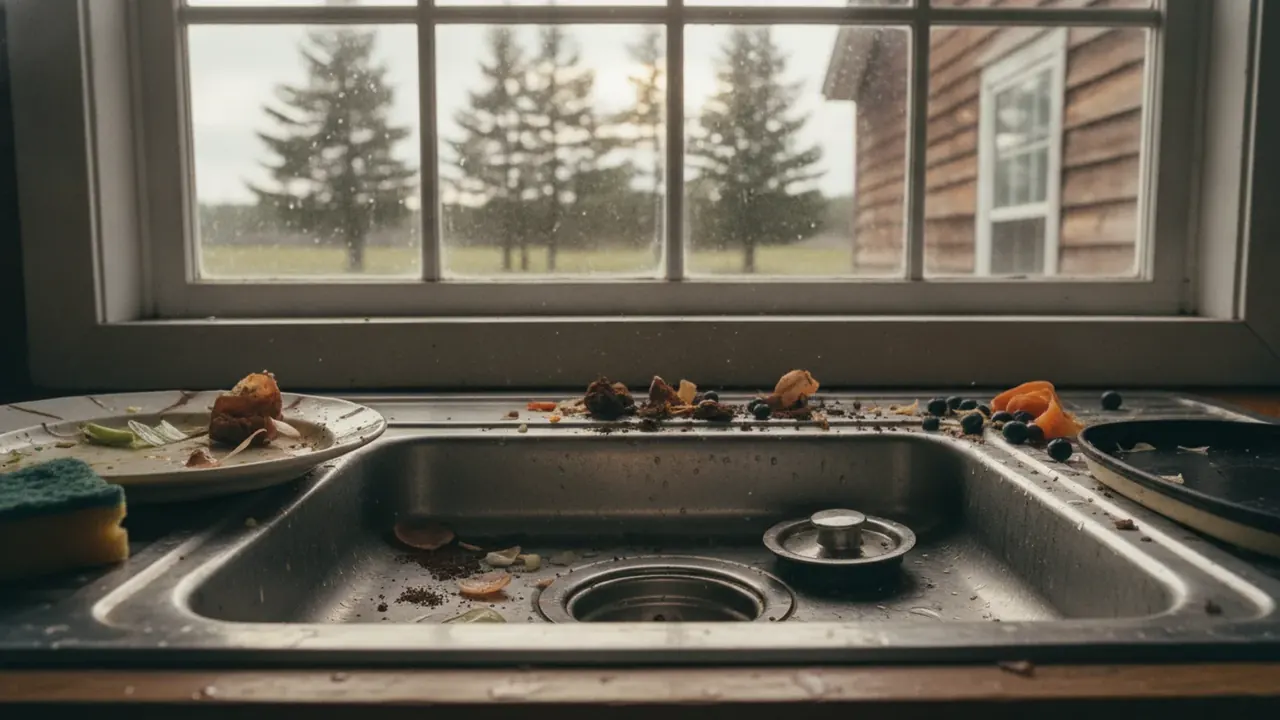
Mike in Brewer had the disposal running almost every night. Onion skins, chicken bones, coffee grounds, the ends of carrots — all of it went down the sink and got chewed up into a fine slurry that flushed toward the tank. He figured that was the whole point of having one. Two and a half years later, when we pulled the lid off his 1,000-gallon tank, the scum layer was already thick enough that he was closer to needing a pump-out than the “every 3 to 5 years” rule most people quote. His neighbor with the same size tank and no disposal was still comfortably a year out. Same house style, same street, same soil. The disposal was the difference.
So can you run a garbage disposal on a septic system in Maine? Technically, yes. Nothing about a disposal will destroy a tank overnight. But it adds real solid load to a system that was designed around a certain amount of waste, and that extra load has to go somewhere — either it settles in your tank and gets pumped out more often, or it works its way toward your drain field, where it does more lasting damage. If you’re asking whether it’s a good idea, our honest answer is: we’d skip it.
What a Disposal Actually Sends Into Your Tank
A garbage disposal doesn’t make food waste disappear. It grinds it into smaller particles and sends it down the pipe with a burst of water. That’s a meaningful difference from what your septic tank was built to handle.
Toilet paper and human waste break down relatively fast once they hit the anaerobic environment inside your tank. Ground-up food scraps don’t break down nearly as quickly, especially fibrous stuff like celery, onion skins, and eggshells, or fatty material like meat trimmings. Instead of dissolving, a lot of it just settles into the sludge layer at the bottom of the tank and sits there.
Multiple studies on residential septic loading, along with what we see firsthand pumping tanks across Penobscot County, point to the same range: households running a disposal regularly add roughly 30 to 50 percent more solids to their tank compared to households that scrape plates into the trash or a compost bin. That’s not a rounding error. It’s the difference between a tank that needs attention every four years and one that needs it every two and a half.
Why That Extra Solid Load Matters More in Maine
A few things about septic systems here make this a bigger deal than it might be in a warmer, less rural state.
Short pumping season, longer intervals between checks. Between mud season limiting truck access and winter freeze-up shutting the door entirely, a lot of Maine homeowners end up pumping on a tighter practical window than the calendar suggests. If your tank is filling faster than expected because of a disposal, you’re more likely to get caught off guard between visits.
Rural drive times mean bigger bills when things go wrong. A tank that backs up because it wasn’t pumped in time, out on a back road in Glenburn or Eddington, doesn’t get a same-day fix as easily as one two minutes from the shop. Extra solids from a disposal raise the odds you’re calling for an emergency visit instead of a scheduled one.
Clay and ledge soils don’t forgive an overloaded field. A lot of drain fields around here already work with thin or heavy soils. If solids bypass the tank and reach the field — which happens more easily when a tank is fuller than it should be — that material clogs the soil pores that let effluent absorb properly. Once a field starts clogging with solids, there’s no additive or trick that reverses it. We’ve covered the fix for a field already in trouble elsewhere; the point here is disposals make that outcome more likely, sooner.
The Real Cost Math
Here’s a simple way to look at what a disposal actually costs you over time, not counting whatever the appliance itself cost to install.
| Factor | No disposal (typical) | Regular disposal use |
|---|---|---|
| Sludge/scum buildup rate | Baseline | 30-50% faster |
| Typical pumping interval, 1,000-gal tank, 3-person household | 3-5 years | 2-3.5 years |
| Extra pump-outs over 15 years | — | 1 to 2 additional visits |
| Risk of premature drain field clogging | Lower | Higher |
Run that out over the life of a system and an extra pump-out or two, at a few hundred dollars each, adds up. It’s real money, and it’s optional money — spent because of a kitchen habit, not because the tank needed it on its own schedule. If you want to see where your tank actually lands cost-wise, our septic pumping cost calculator will give you a number based on your tank size and location.
If You’re Keeping the Disposal Anyway
We get it — some households aren’t giving up the disposal, whether it came with the house or it’s just how they cook. If that’s you, here’s how to keep the damage manageable.
Run it sparingly, not constantly. Save it for the occasional scrap instead of routing every dinner’s worth of waste through it. The difference between “used a few times a week” and “used every night” is significant over a few years.
Skip the fibrous and fatty stuff. Onion skins, celery strings, coffee grounds, and grease are the worst offenders for building sludge that won’t break down. Scrape those into the trash even if the disposal is right there.
Run cold water, not hot, while it’s grinding. Cold water keeps any grease solid enough to move through and out rather than coating the inside of your pipes and tank.
Shorten your pumping interval on purpose. Don’t wait for signs your tank needs pumping to show up — those symptoms usually mean you’re already later than ideal. If you’d normally be on a four-year rotation, plan for closer to three. Ask whoever pumps your tank to measure the sludge and scum layers each visit rather than guessing, and use that reading to fine-tune your actual interval instead of one lifted from a rule of thumb.
Get an inspection if you’re not sure where you stand. If you inherited a disposal with a house purchase and don’t know the system’s history, a baseline check tells you whether the field is already stressed. Our septic inspection service covers exactly that.
Linda in Old Town called us after her disposal jammed and backed up into the sink — not a septic emergency exactly, but it got her thinking about what else was going down there. We walked her tank interval back by a year based on how often she was running it, and that one adjustment has kept her ahead of any trouble since.
The Alternatives We’d Actually Recommend
If you haven’t installed a disposal yet, or you’re weighing whether to replace a broken one, consider skipping it entirely.
A trash can for scraps. The simplest option. Zero solid load added to your tank, zero cost, zero extra pump-outs. The tradeoff is a slightly smellier kitchen trash bin if you don’t take it out often enough.
A countertop or backyard compost setup. Popular with a lot of the camp owners and gardeners we work with around Hampden and Veazie. Food scraps become useful compost instead of septic load, and it keeps grease and coffee grounds — two things that genuinely hurt a system — out of your pipes for good.
A septic-rated disposal used lightly, if you really want one. Some units are marketed as septic-safe because they grind finer or add a bacteria dose with each use. They reduce particle size, which helps somewhat, but they don’t eliminate the added solid load. Treat “septic-safe” as “less bad,” not “no impact.”
Whatever you land on, the goal is the same: less material entering the tank means a longer stretch between pump-outs and a healthier drain field for the life of the system. That’s true whether you’re on a full-time home in Bangor or a seasonal place you’re only opening up for the summer.
Bottom Line
A garbage disposal on a septic system isn’t a code violation and it won’t cause a backup the first week you use it. But it’s a slow tax on your tank — 30 to 50 percent more solids, a shorter pumping interval, and a real risk of pushing material toward a drain field that’s expensive to replace and impossible to fully fix once it’s clogged. If we’re being straight with you: we’d skip it, or use it sparingly and plan your pumping schedule around it rather than around a generic rule of thumb.
Not sure where your tank stands after years of disposal use, or want us to check the sludge layer before you decide what to do next? Call us at (207) 300-9238 or book a pump-out online and we’ll give you a straight read on where you actually stand.
Frequently Asked Questions
Can you use a garbage disposal with a septic system in Maine?
Yes, a septic system can technically handle a garbage disposal, but it is not a good match. Ground food scraps add extra solids to the tank, which fills it faster and pushes more material toward the drain field over time.
How much does a garbage disposal increase septic solids?
Research and field experience both point to roughly 30 to 50 percent more solid accumulation in a tank that regularly receives ground food waste compared to one that does not, which shortens the time between pump-outs.
Do I need to pump my septic tank more often if I have a garbage disposal?
Generally yes. A household with a disposal in regular use often needs to shorten its pumping interval by a year or more compared to the same household without one, depending on tank size and usage.
What should I use instead of a garbage disposal on a septic system?
A trash can for scraps or a backyard compost bin does not add any solid load to the tank at all, and composting has the added benefit of keeping grease and coffee grounds out of the system entirely.