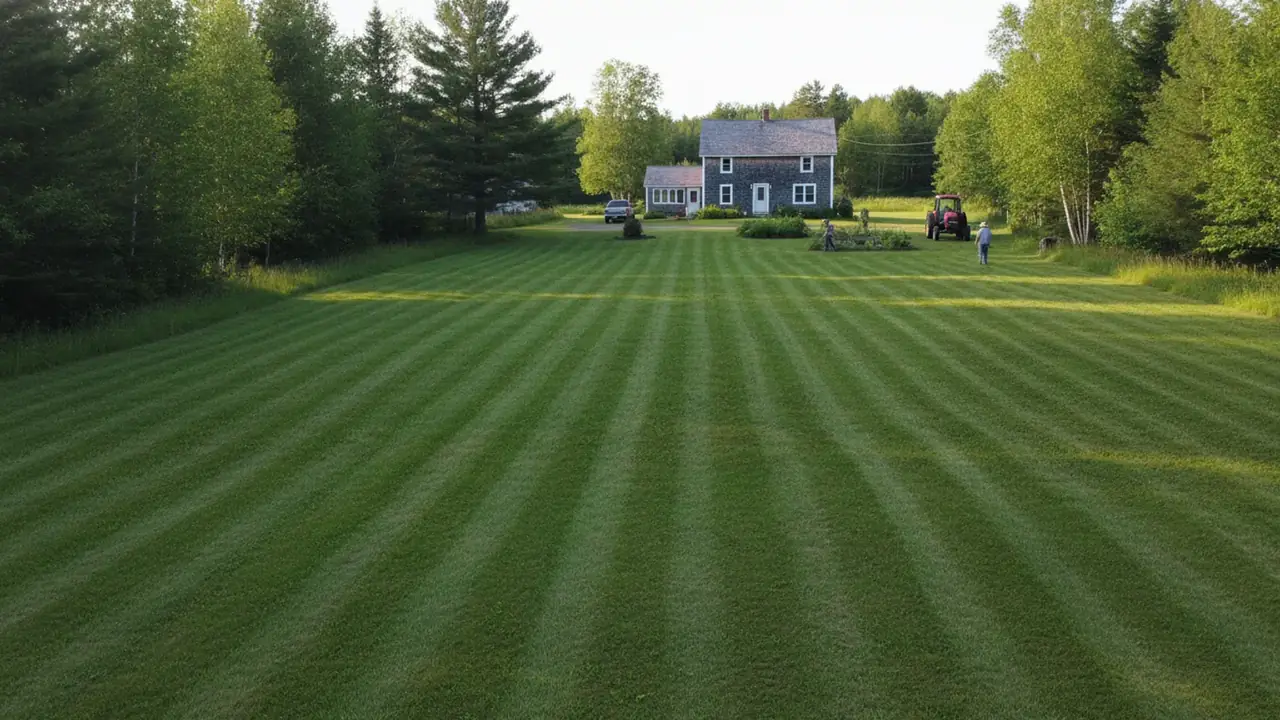
Mike in Brewer bought his place in April, walked the yard in May, and decided the flat, sunny strip behind the garage was the perfect spot for a vegetable garden. By July he had tomatoes, beans, and a compost bin going. By September he had a plumber on speed dial, because that flat sunny strip was his drain field, and the tiller had found a distribution pipe about four inches down.
Here’s the short version before the story gets worse: grass is safe over a septic field. Shallow perennials and groundcover are mostly fine. Trees, shrubs, vegetable gardens, pavement, parking, and sprinklers are not. That field is the most expensive part of your septic system to replace, and it is sitting right under your lawn asking to be left alone.
Why the Field Is the Part You Protect
Your tank holds solids and lets liquid flow out to the drain field, where a network of perforated pipe spreads that wastewater into gravel and soil to be filtered naturally. The field does the real work of treatment. It is also the part of the system with no metal box, no lid, and no easy fix if something goes wrong underground. A pump-out is a routine bill. A drain field problem is a different category of expense entirely, and in Penobscot County’s mix of ledge, clay, and thin topsoil, a damaged field is often a full replacement, not a patch.
Everything you do or do not plant over that field either protects the soil’s ability to absorb water or works against it.
Safe: Grass and Shallow Groundcover
Grass is the gold standard for a reason. A healthy lawn does three things a bare field cannot:
- Holds the soil in place so it does not erode or wash out around the pipe.
- Pulls moisture up through shallow roots, which actually helps the field handle wastewater instead of staying saturated.
- Leaves nothing behind that can grow into a pipe, since turf grass roots rarely go deeper than 4 to 6 inches.
Beyond turf, a handful of shallow-rooted perennials and groundcovers are generally fine over a field:
- Daylilies and hostas. Fibrous, shallow root systems that spread but do not dig deep.
- Creeping phlox and sedum. Ground-hugging, drought-tolerant, and low-maintenance, which suits a spot you should not be fussing over with a shovel anyway.
- Ornamental grasses like fescue clumps, kept small. Avoid anything that gets planted as a screening hedge.
Keep the rule simple: if it needs a hole deeper than a trowel to plant, or it will eventually need dividing with a spade, think twice before it goes over the field.
Not Safe: Trees and Shrubs
This is the one that costs the most money when it goes wrong, and it is also the one people underestimate the longest because the damage happens slowly, underground, out of sight.
Tree and shrub roots are drawn to water and nutrients, and a drain field is a steady, reliable source of both. Roots do not politely stop at the pipe. They grow into cracks, joints, and perforations looking for moisture, and once they are in, they expand, crack pipe, and choke off the flow the field needs to work. By the time you see a soggy patch of lawn or notice standing water where there should not be any, root intrusion has usually been building for years — the kind of slow failure covered in how often a tank needs pumping versus a field problem that pumping cannot fix.
| Tree or Shrub Type | Minimum Distance from Field | Why |
|---|---|---|
| Willow | 50+ feet | Extremely aggressive, water-seeking roots |
| Silver maple, red maple | 30–40 feet | Fast-growing, shallow, spreading root systems |
| Poplar, aspen | 40+ feet | Roots travel far and fast looking for water |
| Birch | 25–30 feet | Moderate spread, still opportunistic near moisture |
| Oak | 20–25 feet | Deep taproot but wide-spreading feeder roots |
| Small ornamental shrubs (lilac, forsythia) | 10 feet minimum | Smaller footprint but still capable of clogging pipe over time |
| Evergreens (pine, spruce) | 20–25 feet | Generally less aggressive but still worth the buffer |
These numbers are general guidance, not a guarantee, since soil type, ledge, and the exact layout of your field all change the picture. If you are planning any new planting near a field and want it confirmed for your specific lot, the Maine Subsurface Wastewater Program publishes setback standards, and your installer’s original site plan should show exactly where the pipes run. If you are on a private well, the well and septic distance requirements set the hard minimums.
Linda in Old Town learned this one the expensive way. A row of lilac bushes planted along the edge of her field looked harmless for a decade. By year twelve, roots had worked into two pipe joints and the far end of the field stopped draining. What would have been a simple pump-out turned into a partial field replacement, because nobody connected slow-growing shrubs to a slow-draining field until the lawn started staying wet for days after every rain.
Not Safe: Vegetable Gardens
Two separate problems here, and either one is enough reason to say no.
First, digging and tilling. Vegetable beds get turned over every season, and even a hand trowel can hit a pipe that is only a foot or so below grade in places. Second, and more important: that soil is actively processing wastewater. It is not the soil you want growing food your family eats, no matter how well the system is working. The EPA’s septic guidance is clear that drain fields should stay planted in grass, not food crops, for exactly this reason.
If you want a garden, put it well off to the side of the field, ideally uphill and away from the tank and pipe runs entirely. Raised beds elsewhere on the property solve the itch to grow something without putting a shovel anywhere near buried infrastructure.
Not Safe: Paving, Parking, and Driving
The pipes and gravel bed under a drain field sit just below the surface and were never engineered to bear weight. A driveway, a parking pad, a basketball hoop base, even a shed on skids dragged across the field, all risk compacting the soil or crushing pipe outright.
Compaction is the quieter danger. It does not crack anything immediately, but it squeezes the air and pore space out of soil that needs both to absorb liquid. A compacted field drains slower, backs up sooner, and shortens the life of the whole system even without a single broken pipe. Keep vehicles, trailers, and heavy equipment off the field permanently, not just during wet spells. If you are not sure exactly where your field’s boundaries are before you park anything nearby, it is worth taking the time to find your septic tank and trace the field lines first.
Not Safe: Irrigation
A sprinkler zone that happens to overlap the field is a common, honest mistake. The field’s whole job is absorbing the wastewater your household already produces. Adding lawn irrigation on top of that asks the soil to handle water it was never sized for, and a saturated field drains slower and fails faster.
If your yard has an in-ground sprinkler system, have the installer route that zone around the field, not through it. Hand-watering the lawn over the field occasionally is fine. Automatic daily irrigation over it is not.
What This Looks Like Put Together
| Landscaping Choice | Over the Field | Notes |
|---|---|---|
| Turf grass | Yes | The default and the best option |
| Shallow perennials (daylilies, sedum) | Generally yes | Avoid deep-root spreaders |
| Vegetable garden | No | Put it well to the side |
| Shrubs | No, keep 10+ feet back | Even small ones eventually reach for moisture |
| Trees | No, keep 20–50 feet back | Distance depends on species, see table above |
| Driveway or parking | No | Compacts soil, crushes pipe |
| In-ground sprinklers | No | Adds water the field cannot afford |
| Decorative mulch ring at the tank lid | Yes, at the lid only | Common and harmless around a riser |
The One Exception: Marking the Tank, Not the Field
A small mulched ring or a shallow decorative border around a septic riser lid is fine and common. That is a tiny footprint right at the tank, not the field, and it does not involve digging once it is set. If your tank does not have a riser yet, that is worth doing before you plant anything nearby anyway, since it saves a dig-and-search every time the tank needs pumping and keeps future yard work well clear of the actual buried lid.
One more thing worth saying plainly: whatever landscaping questions come up, never open or climb into a septic tank yourself to check on roots, pipes, or anything else. The gases inside can be lethal, and any inspection below the lid belongs to a professional with the right equipment.
Get the Layout Confirmed Before You Plant
If you are not sure exactly where your field sits, or you inherited a property with landscaping already close to the pipes, it is worth having someone walk the lot with you before you put another shrub in the ground. We can locate your field, flag safe planting boundaries, and let you know if anything already in the yard is a long-term risk. Curious what a checkup or pump-out costs while we are out there anyway? Give us a call at (207) 300-9238 or book online and we will get you squared away before the next planting season, not after a root finds your pipe.
Frequently Asked Questions
Can I plant a garden over my septic field?
No. Vegetable gardens should not go over a septic drain field. Tilling and digging can damage the buried pipes, and the soil there is not intended for growing food since it processes wastewater. Keep vegetable beds well off to the side of the field.
How far should trees be from a septic field in Maine?
As a general rule, keep large trees at least 20 to 30 feet from the field and small ornamental trees or shrubs at least 10 feet away. Aggressive rooting species such as willow, maple, and poplar need even more distance since their roots actively seek out the moisture in a drain field.
Why cannot I park or drive over my septic field?
The pipes and soil in a drain field are only a foot or two below the surface and are not built to hold weight. A parked car, a driveway, or even repeated foot traffic from heavy equipment can compact the soil or crush the pipe, and compacted soil stops absorbing wastewater properly.
Is it safe to run a sprinkler system over a septic field?
No. Irrigation adds extra water to soil that is already handling all the wastewater it can absorb. Extra water from a sprinkler system can saturate the field, slow drainage, and shorten the life of the system. Water the lawn over the field naturally or not at all.